"The caves are a must see the guide was excellent only downside is the bus air con failed on the way back due to a leak"
Hidalgo, Mexico · Hot-Water Caves · Turquoise River
Grutas de Tolantongo — Hot-Water Caves & Cliffside Pools
A natural thermal park hidden in a canyon north of Mexico City — soak in hot-water caves, swim the turquoise Río Tolantongo, and float in cliffside pools. Book a guided day trip from the capital.
Top pick
From
$132
per person
Free cancellation
- 4.6 / 5 654+ Reviews
- 40+ Pools Thermal Baths
- Bilingual Local Guide
- Free Cancellation
The Experience
What Makes Tolantongo Worth the Long Drive
Hot-water caves, a turquoise river, and cliffside thermal pools — all in one canyon in Hidalgo.
Highlights
- Relax swimming in up to 40 different thermal water pools of Tolantongo Caves
- Take amazing photos of this natural paradise
- Enjoy your visit to Tolantongo Caves in a small group
- Access the paradise tunnel section with a zipline
- Discover hidden pools, waterfalls, and explore the caves
What's Included
- Entrance to Tolantongo Caves
- Roundtrip transportation from meeting point in Mexico City
- Bilingual guide
- Box lunch (only if the option is selected)
How a Tolantongo Day Trip Works
Four steps from a Mexico City pickup to a day in the caves, river and cliffside pools.
Get Picked Up in Mexico City
Most tours leave central Mexico City around 5:30 am — the drive north into Hidalgo is roughly four hours each way, so you meet early and let the guide handle the long haul.
Enter the Tolantongo Canyon
Arrive at the Grutas de Tolantongo, a river canyon run by a local ejido cooperative. Park entry is paid in cash at the gate; guided day trips typically include or arrange it for you.
Caves, River & Cliff Pools
Wade into the hot-water cave and tunnel, swim the turquoise Río Tolantongo, and soak in the cliffside thermal pools perched above the gorge. You get roughly four hours on site.
Ride Back the Same Day
Re-board for the long drive back to Mexico City, usually returning late evening. No overnight, no self-driving the mountain roads — just the day in the water.
Photo Gallery
Grutas de Tolantongo — Through the Lens
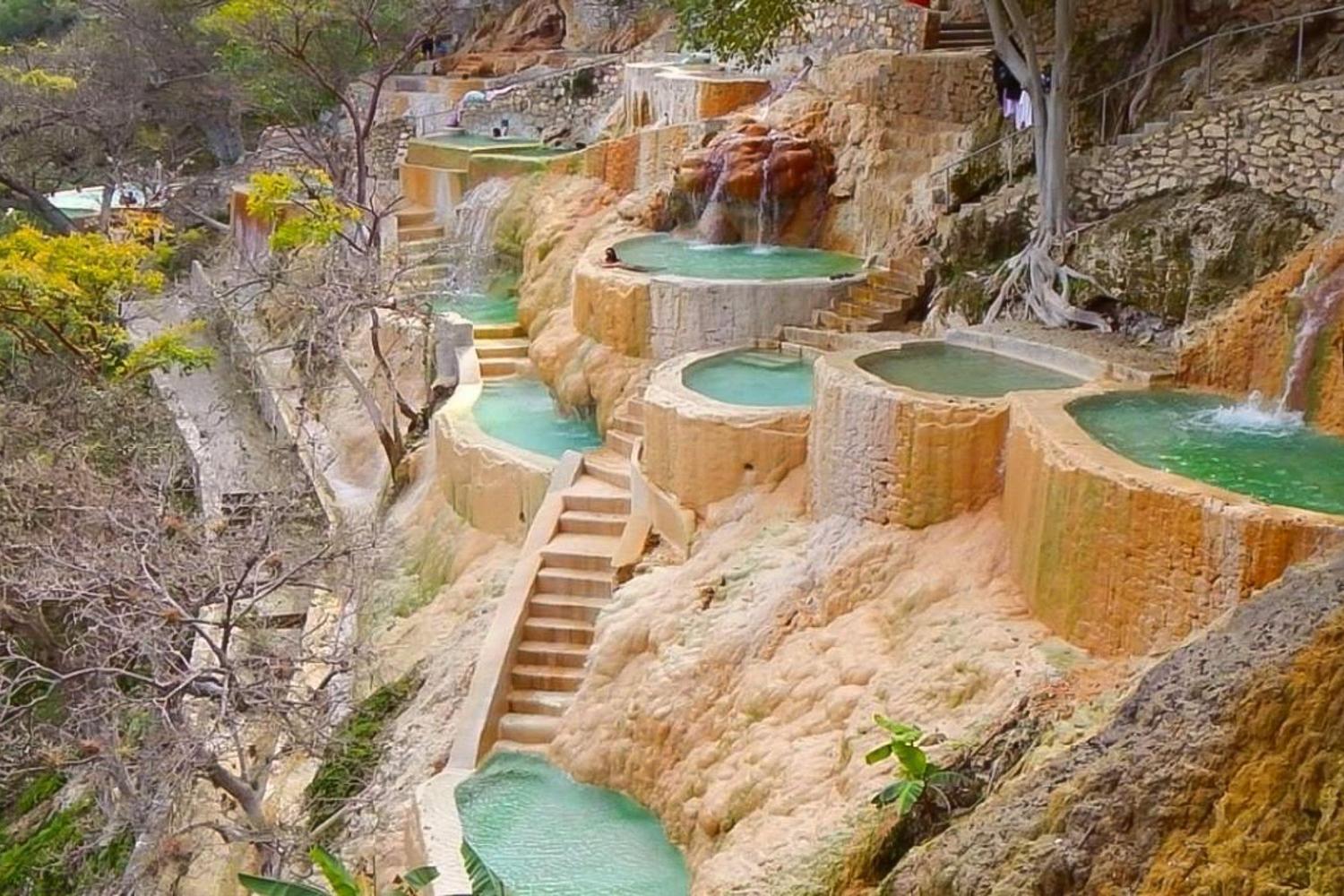
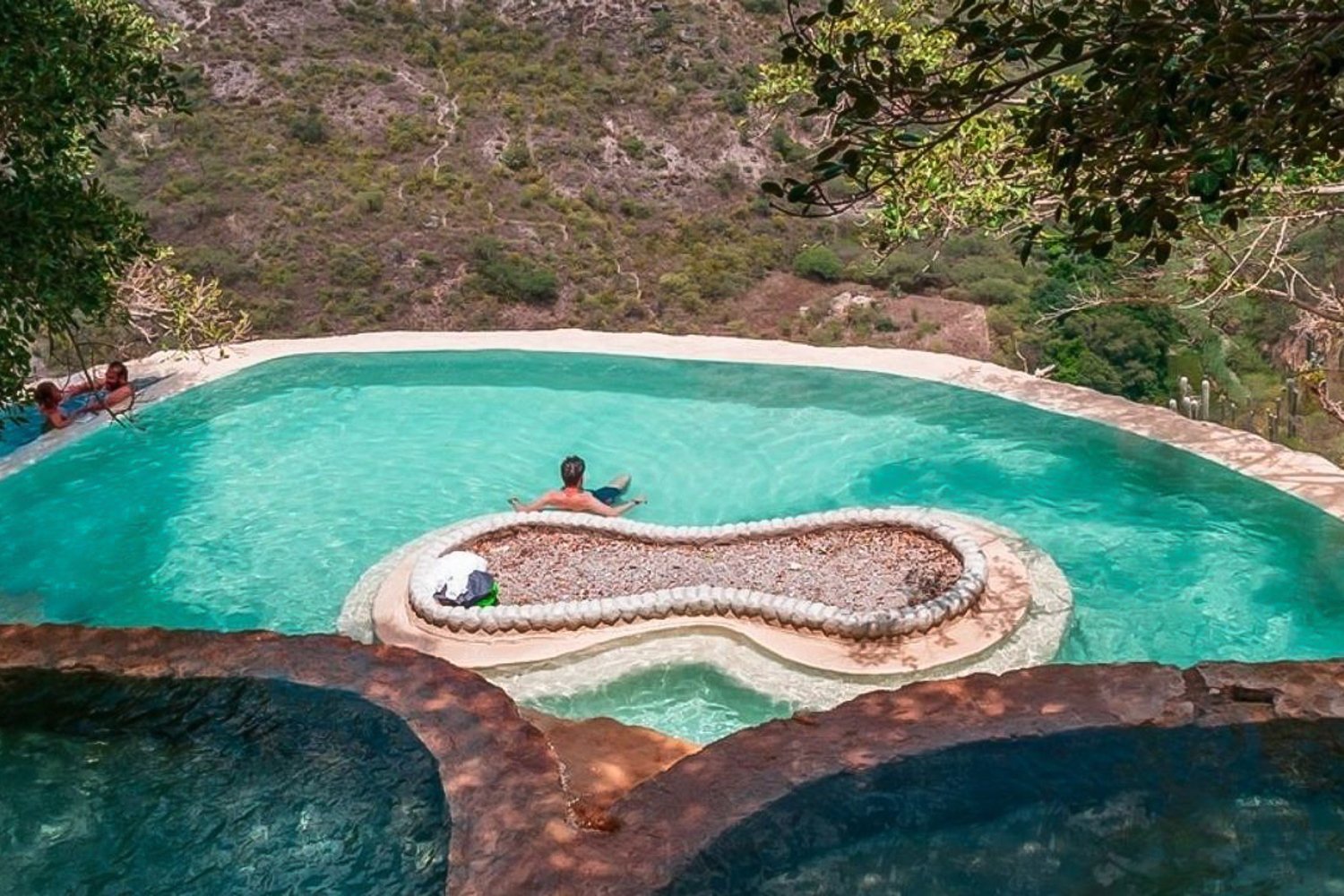
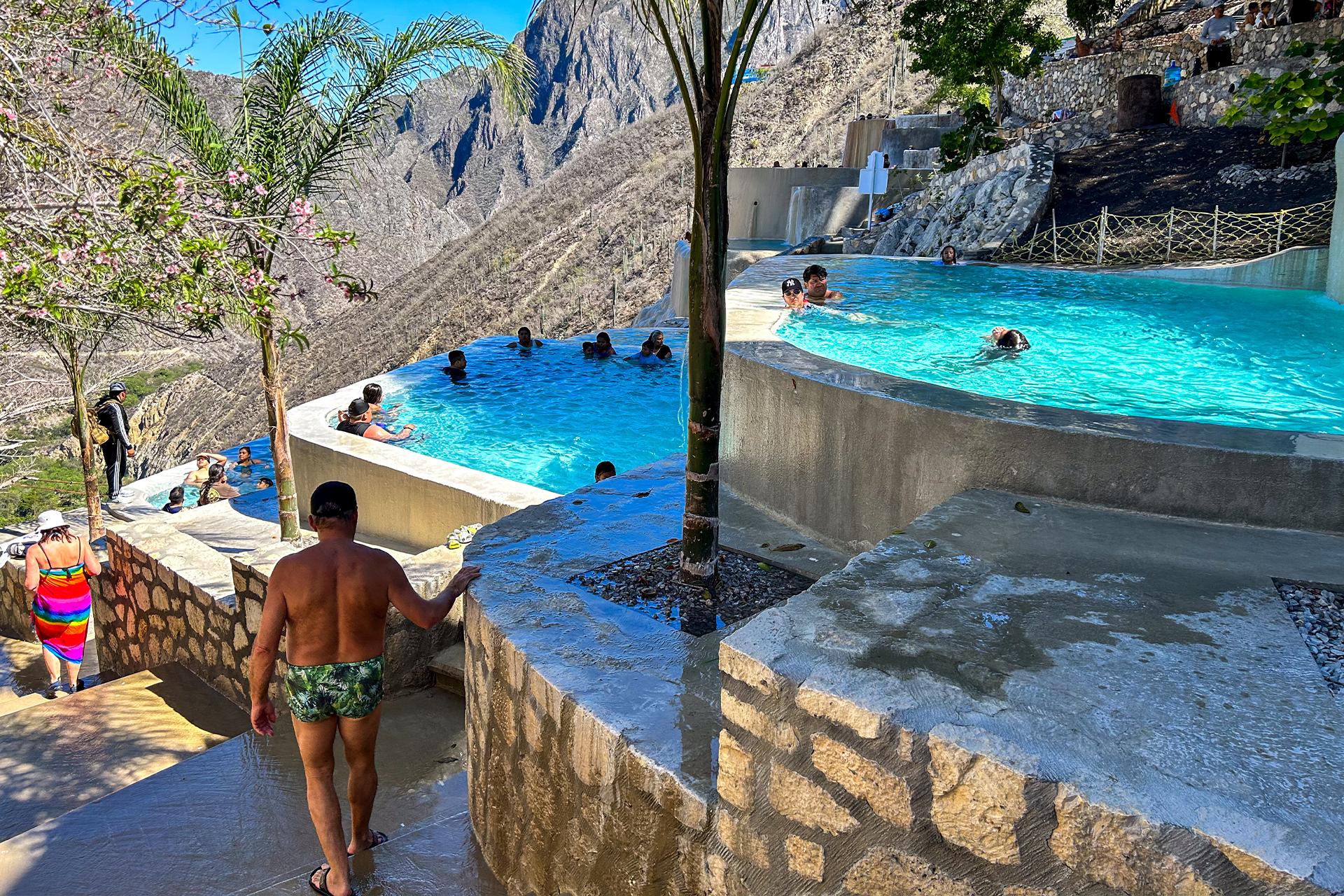
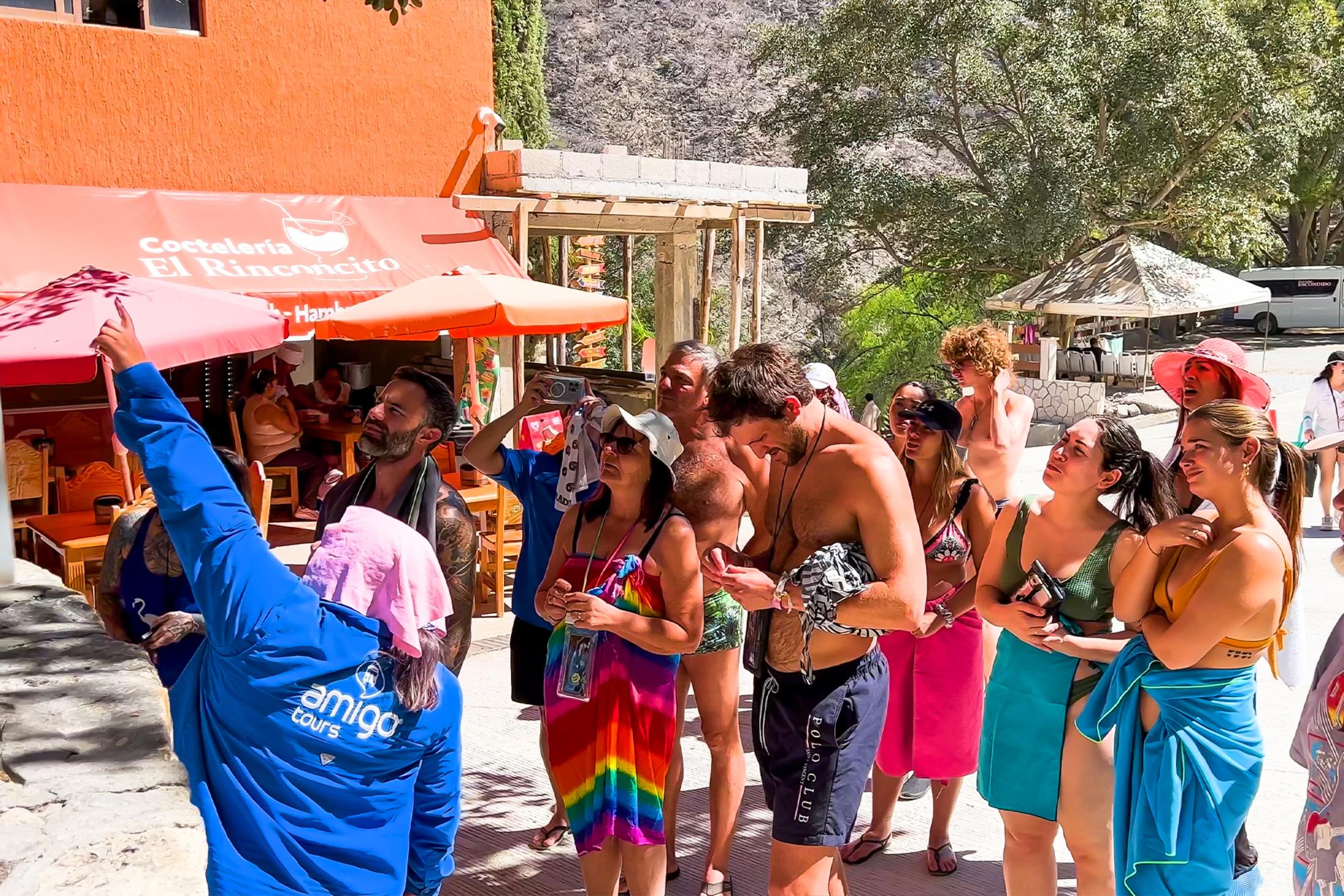
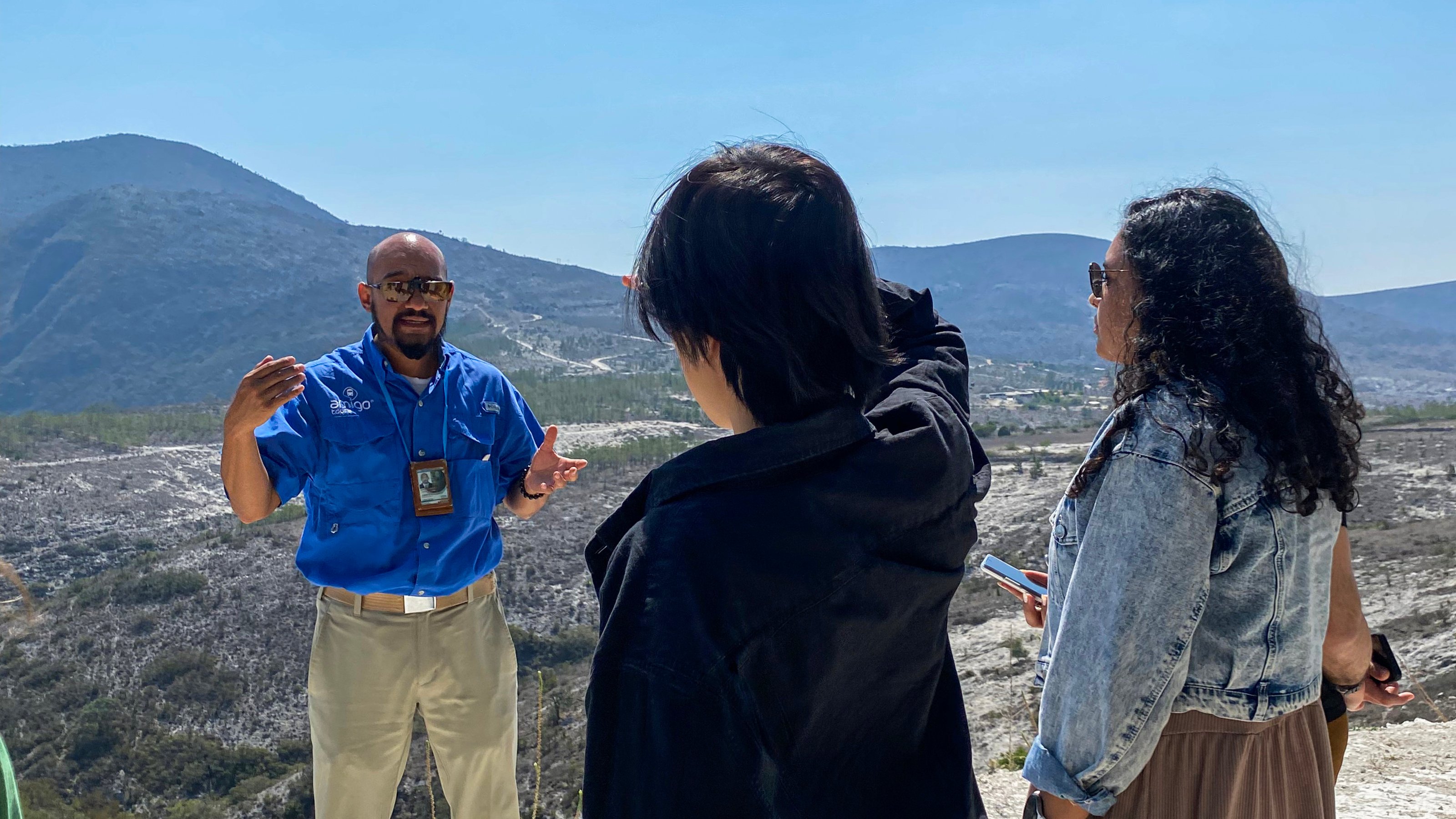
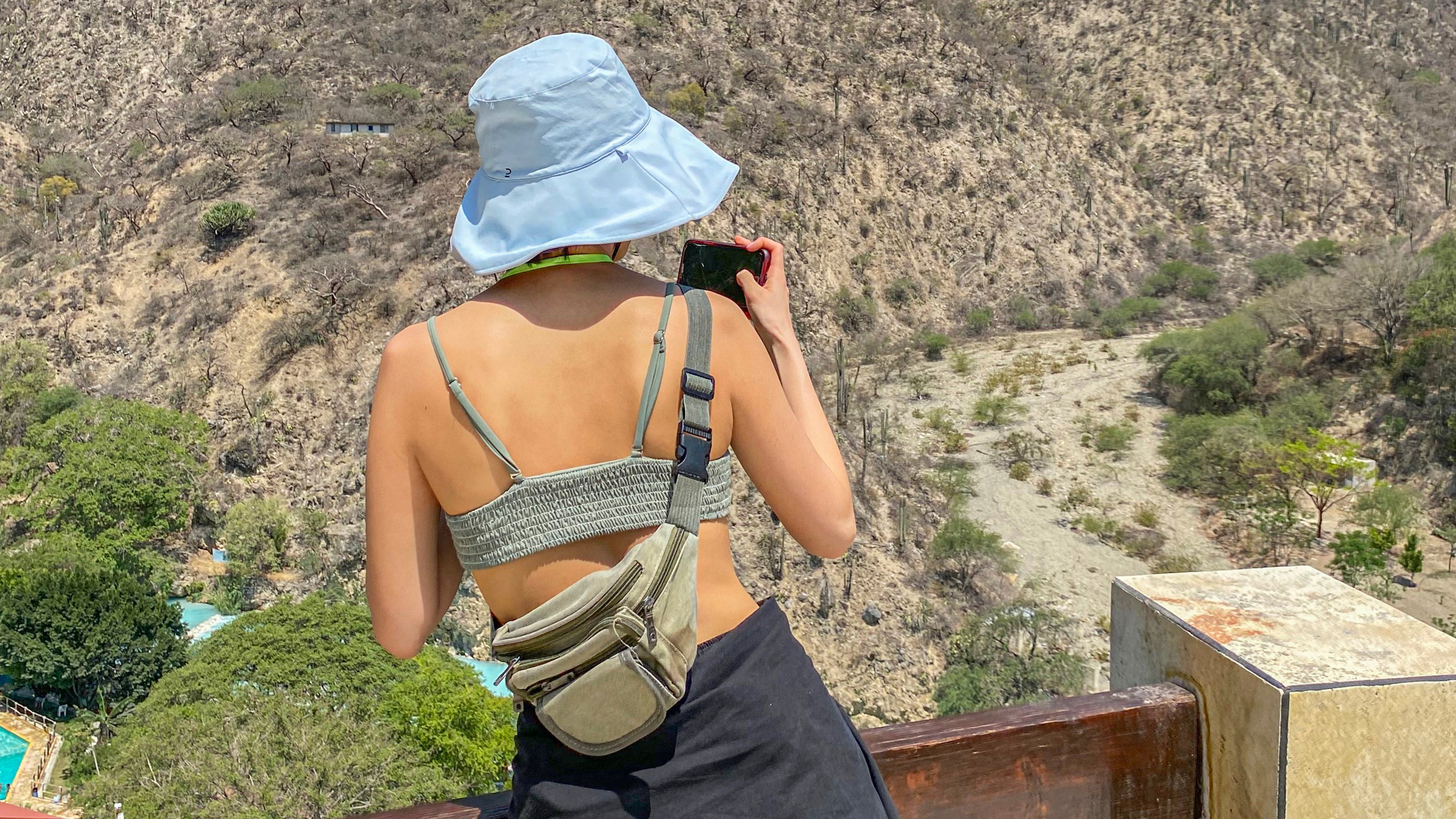
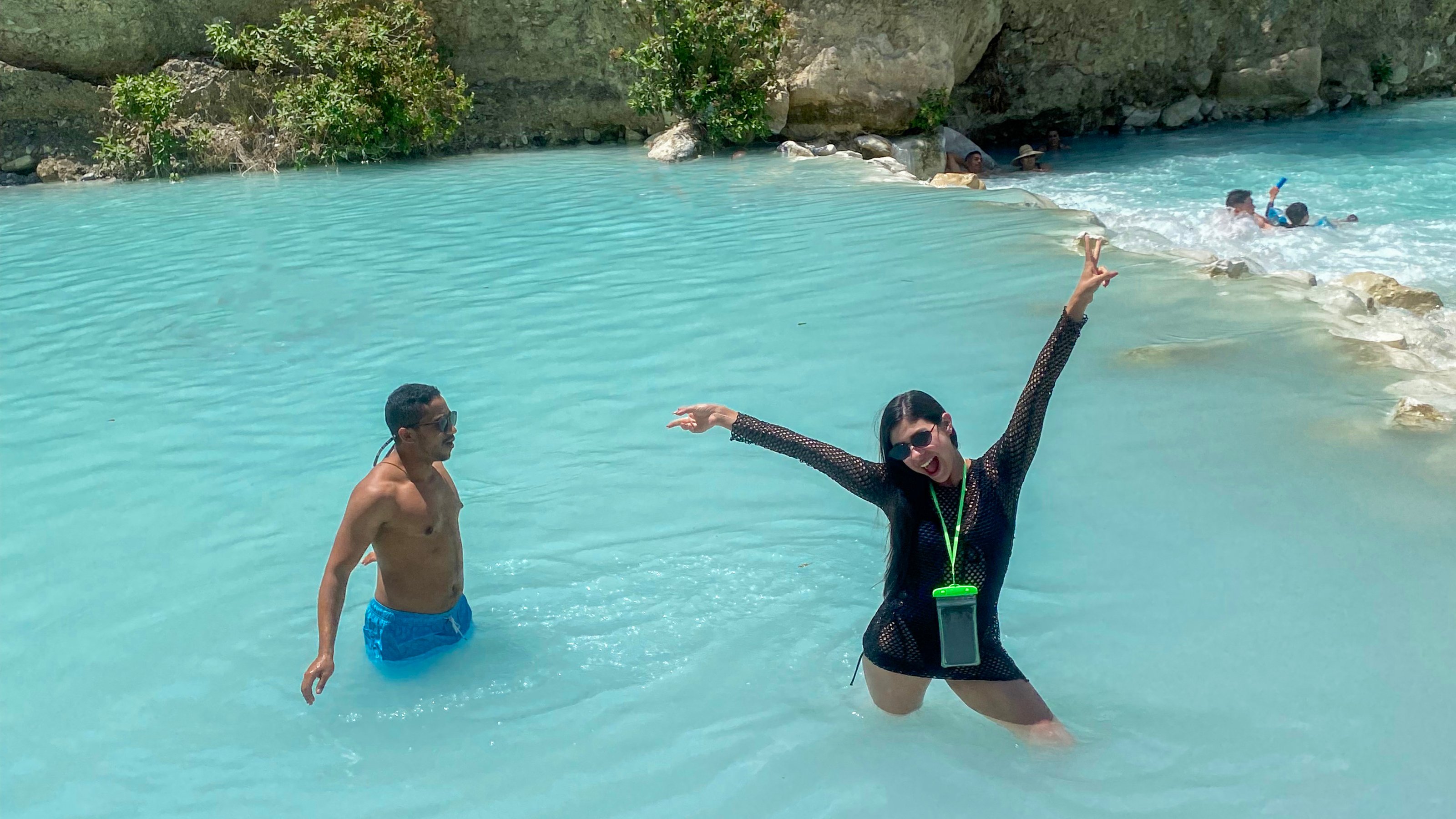
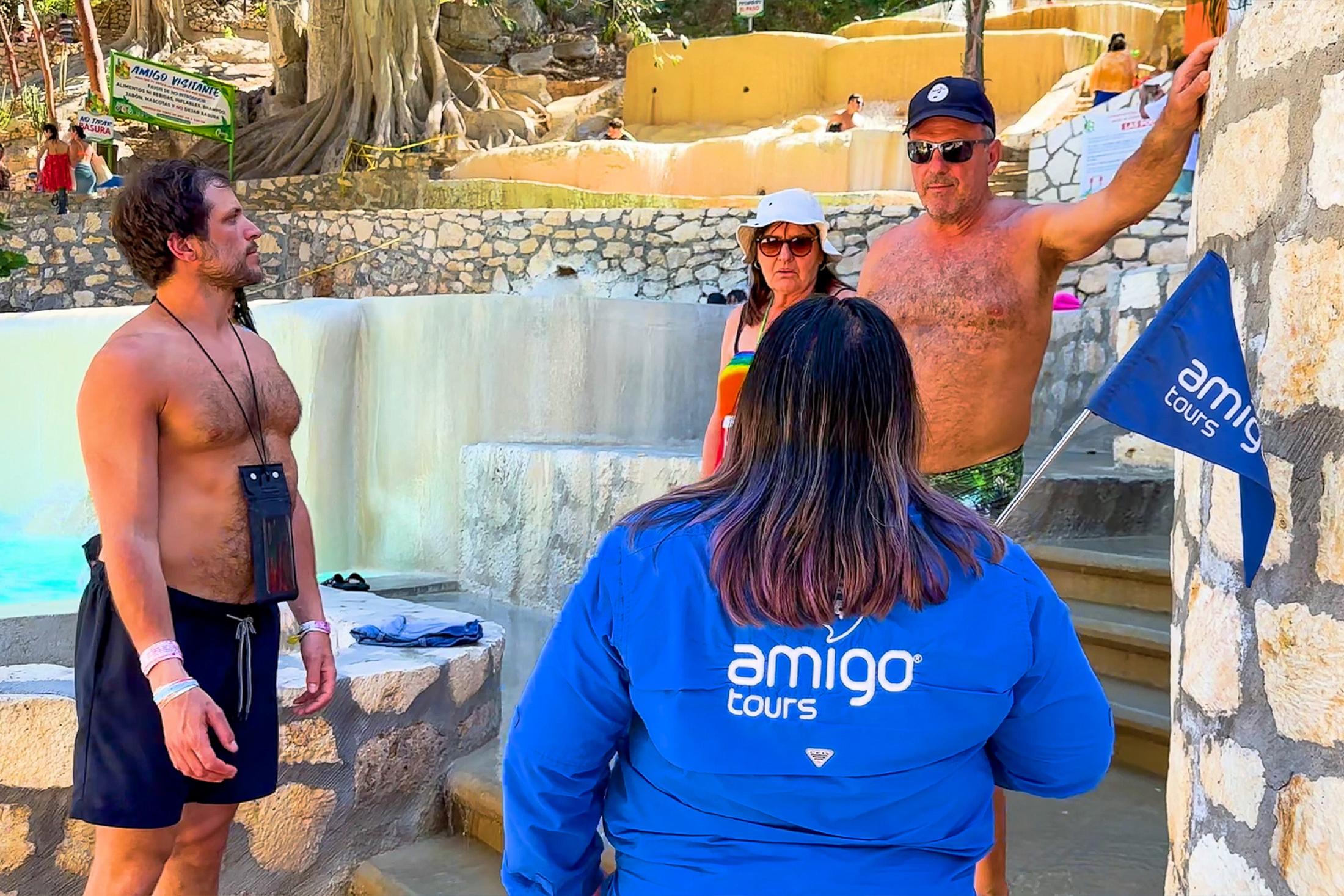
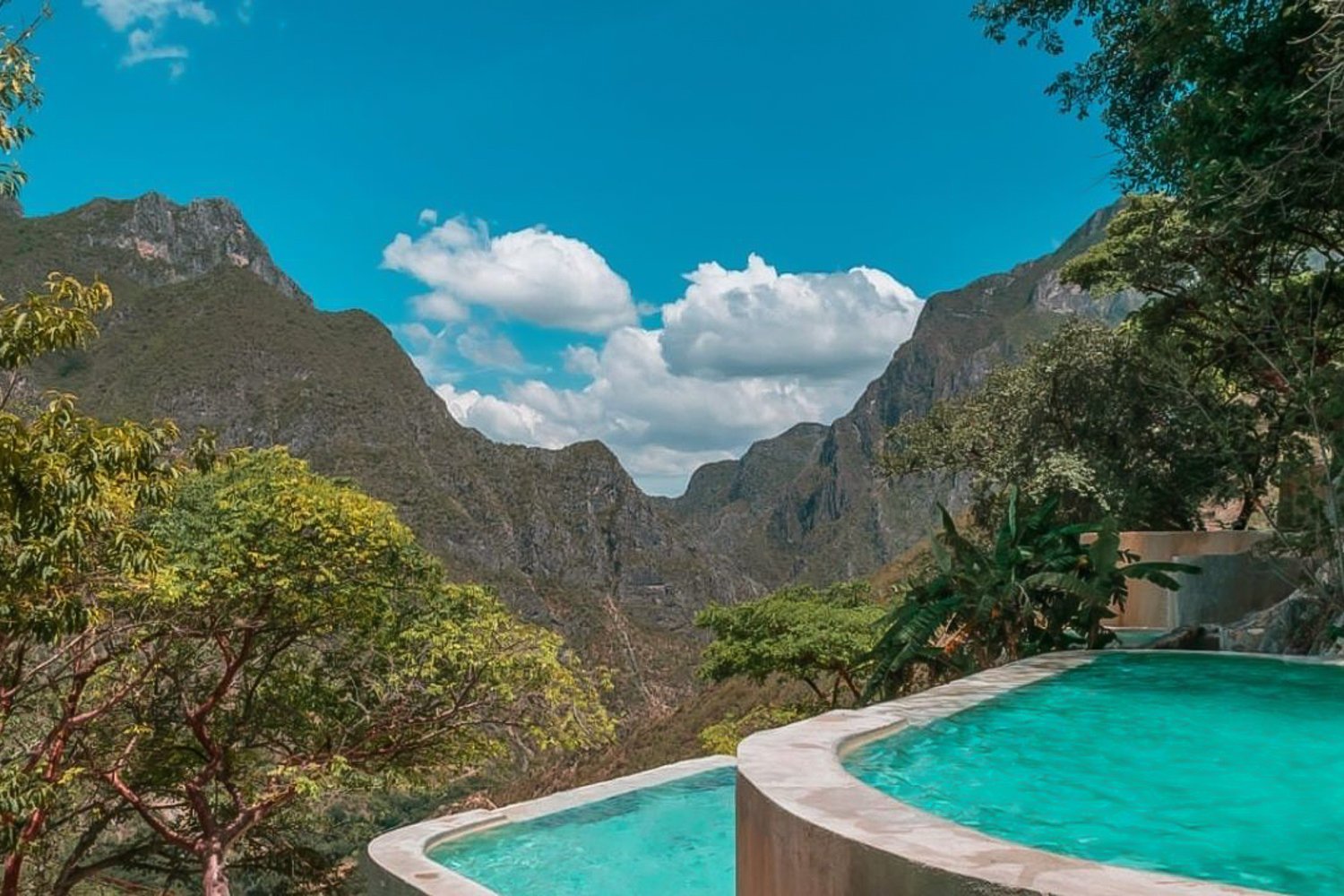
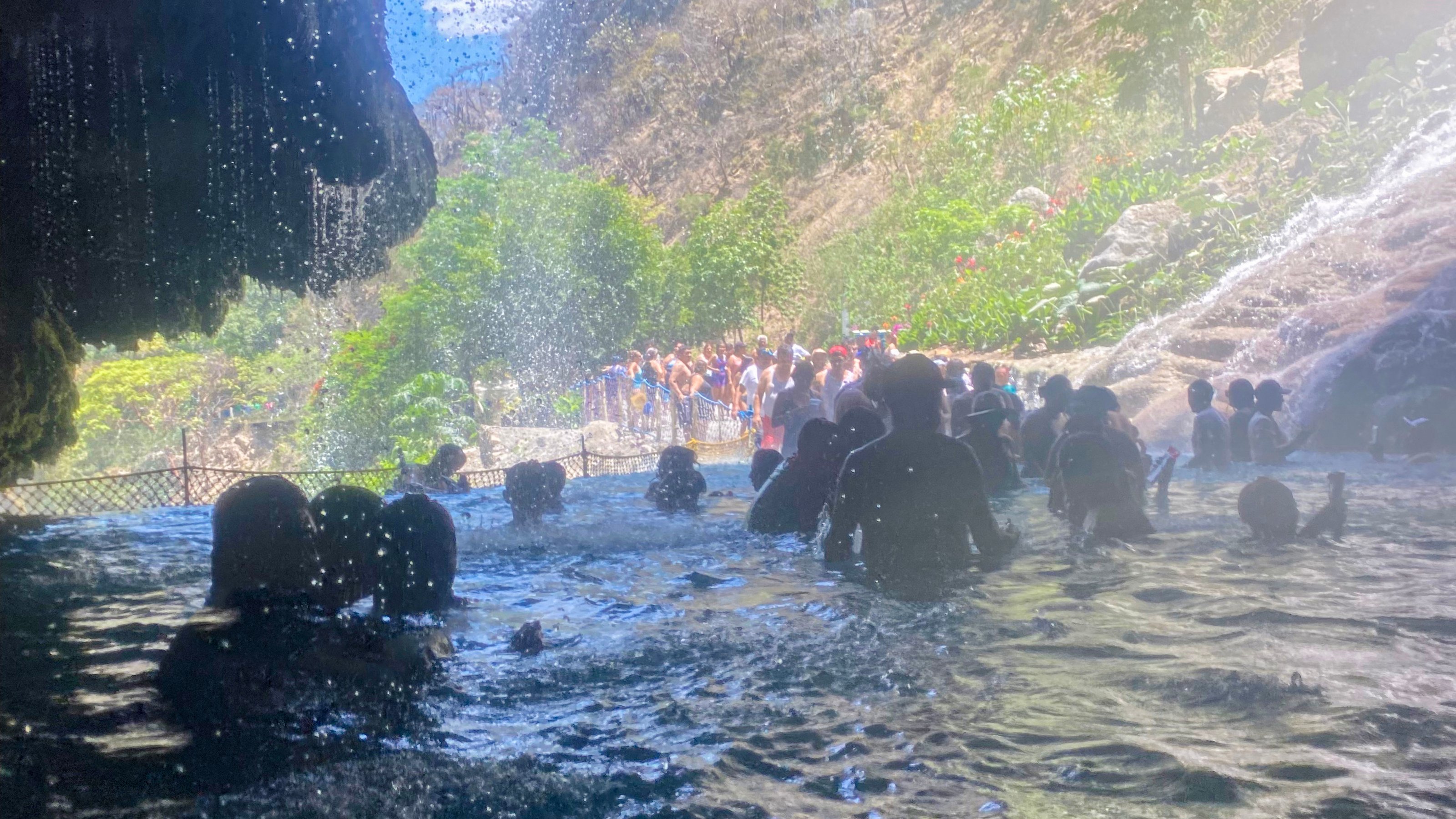
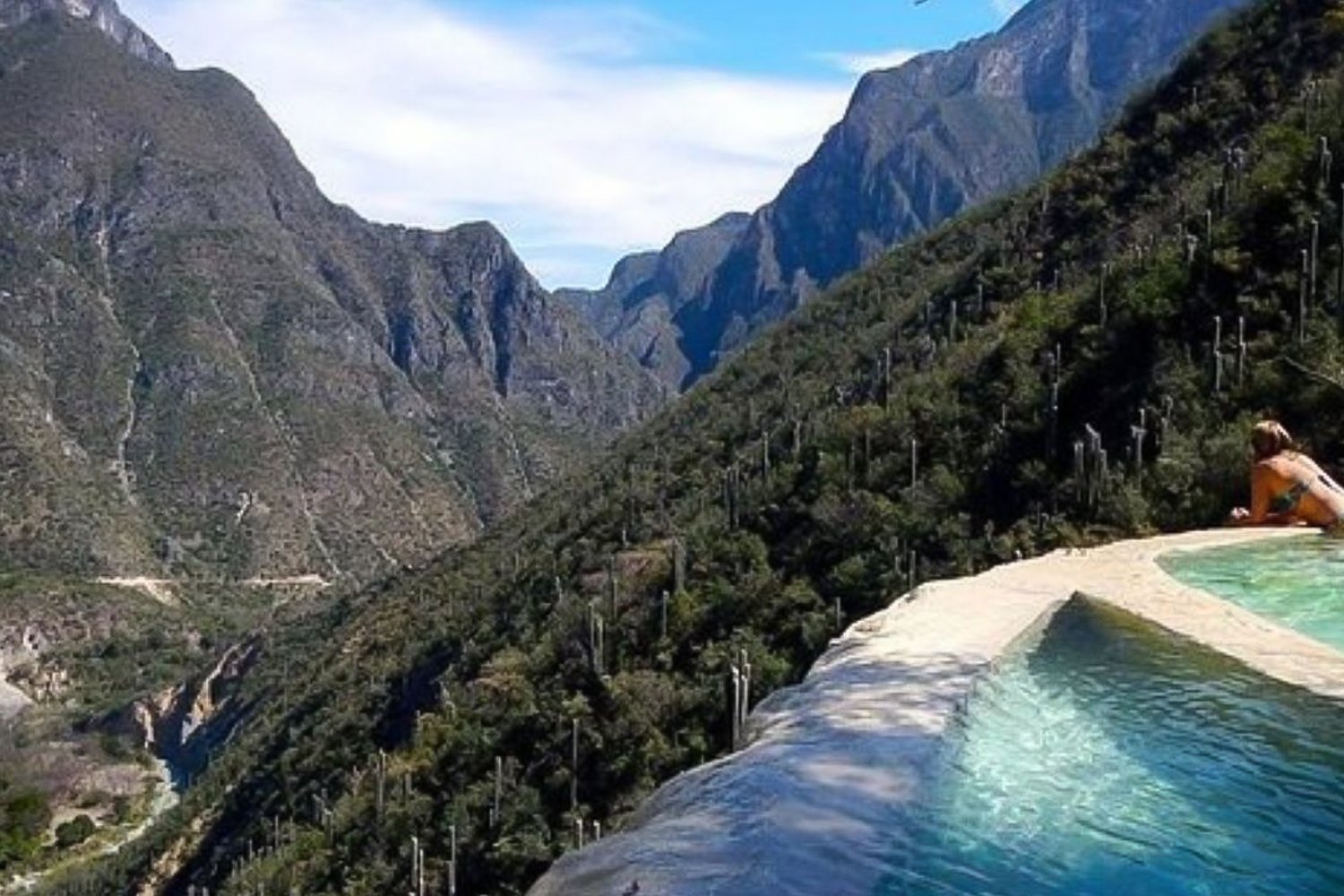
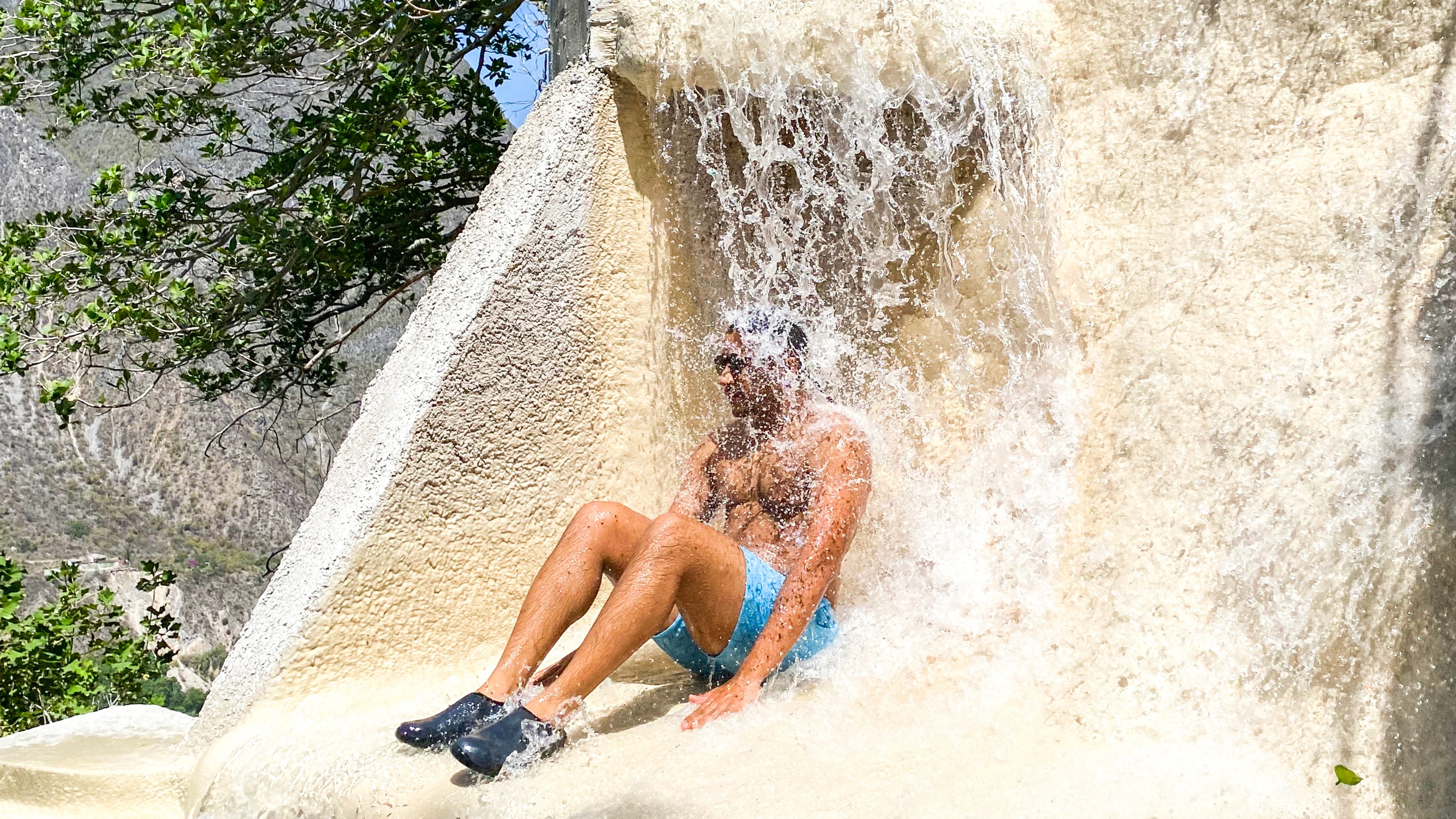
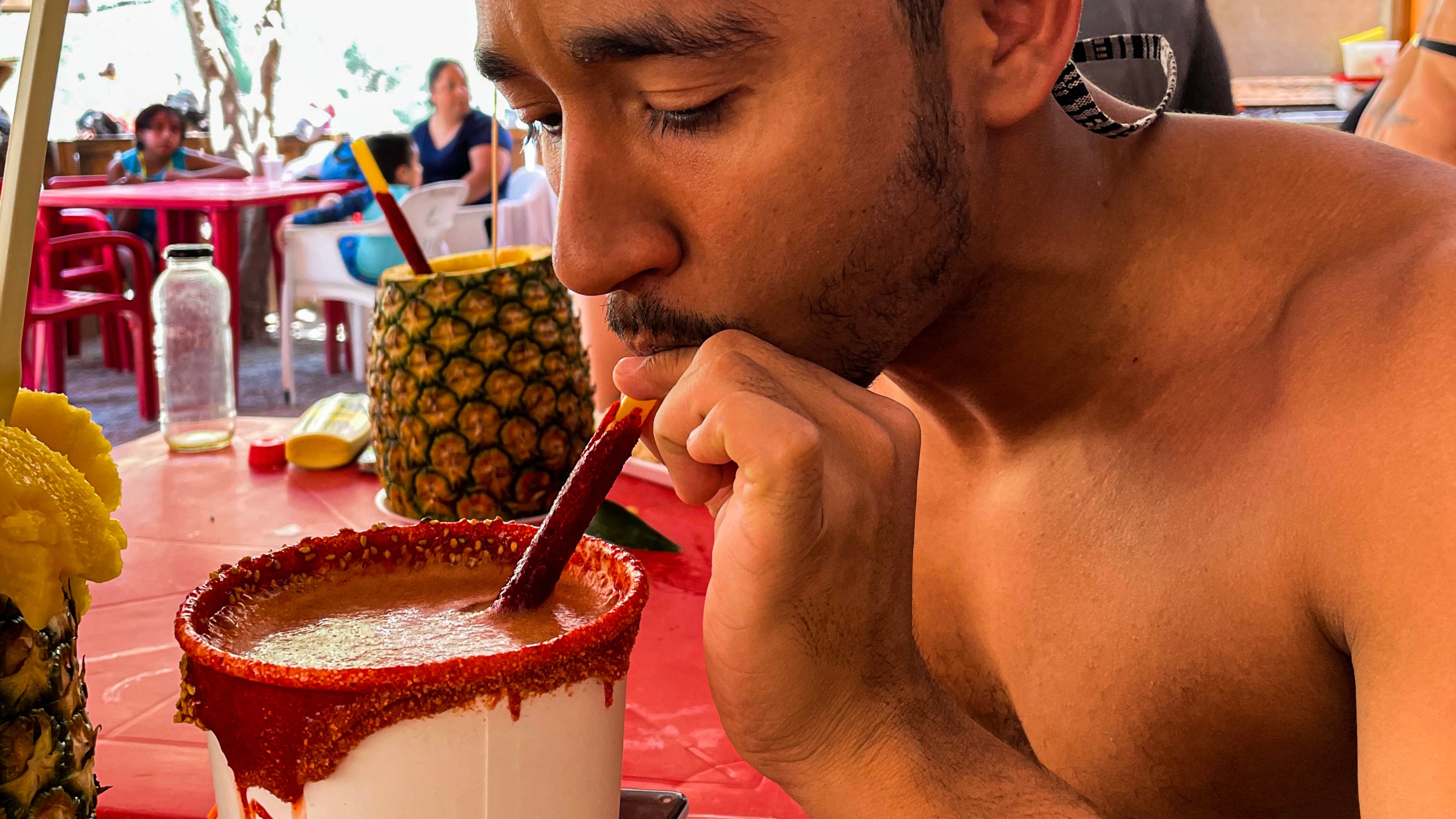
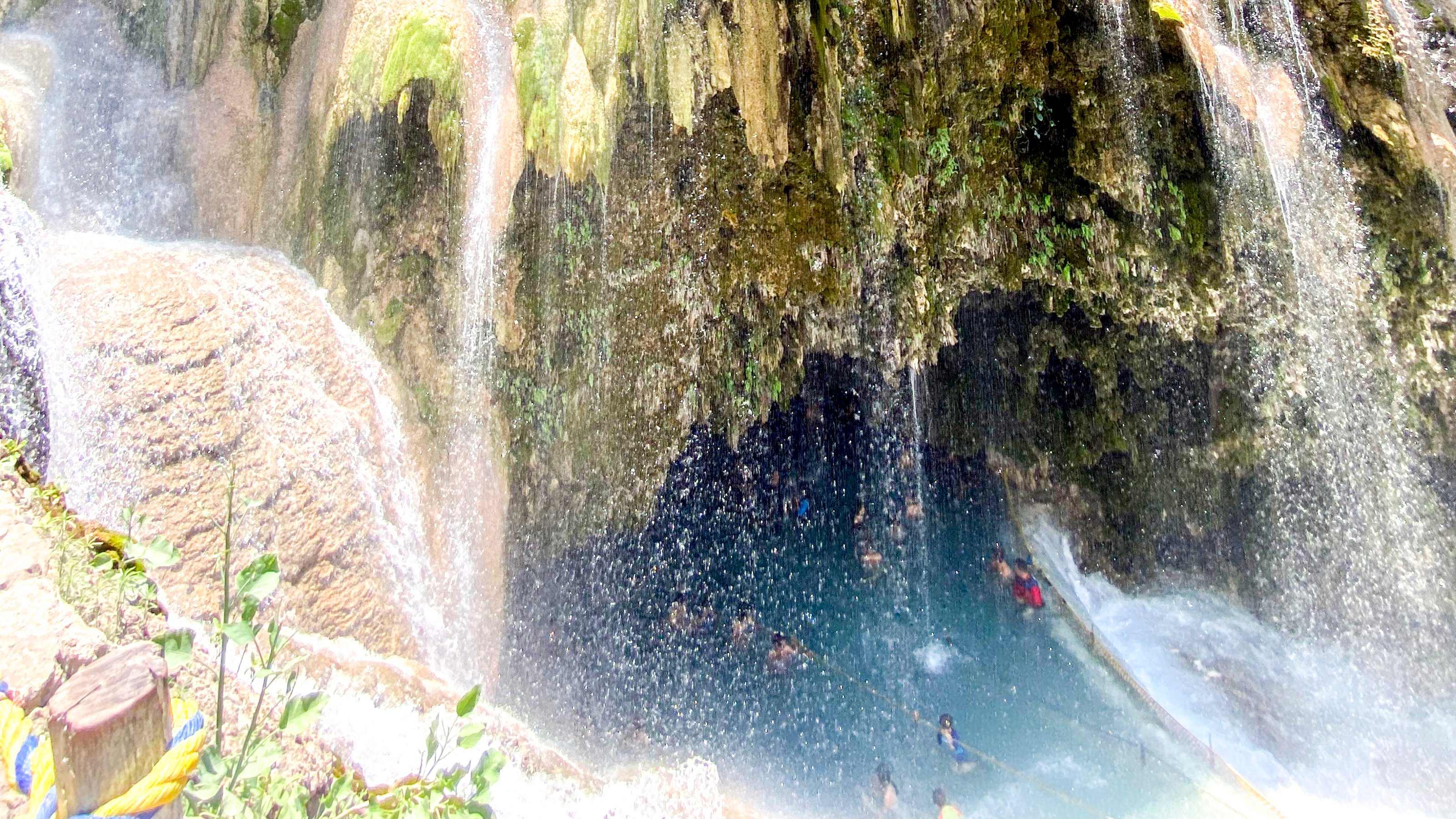
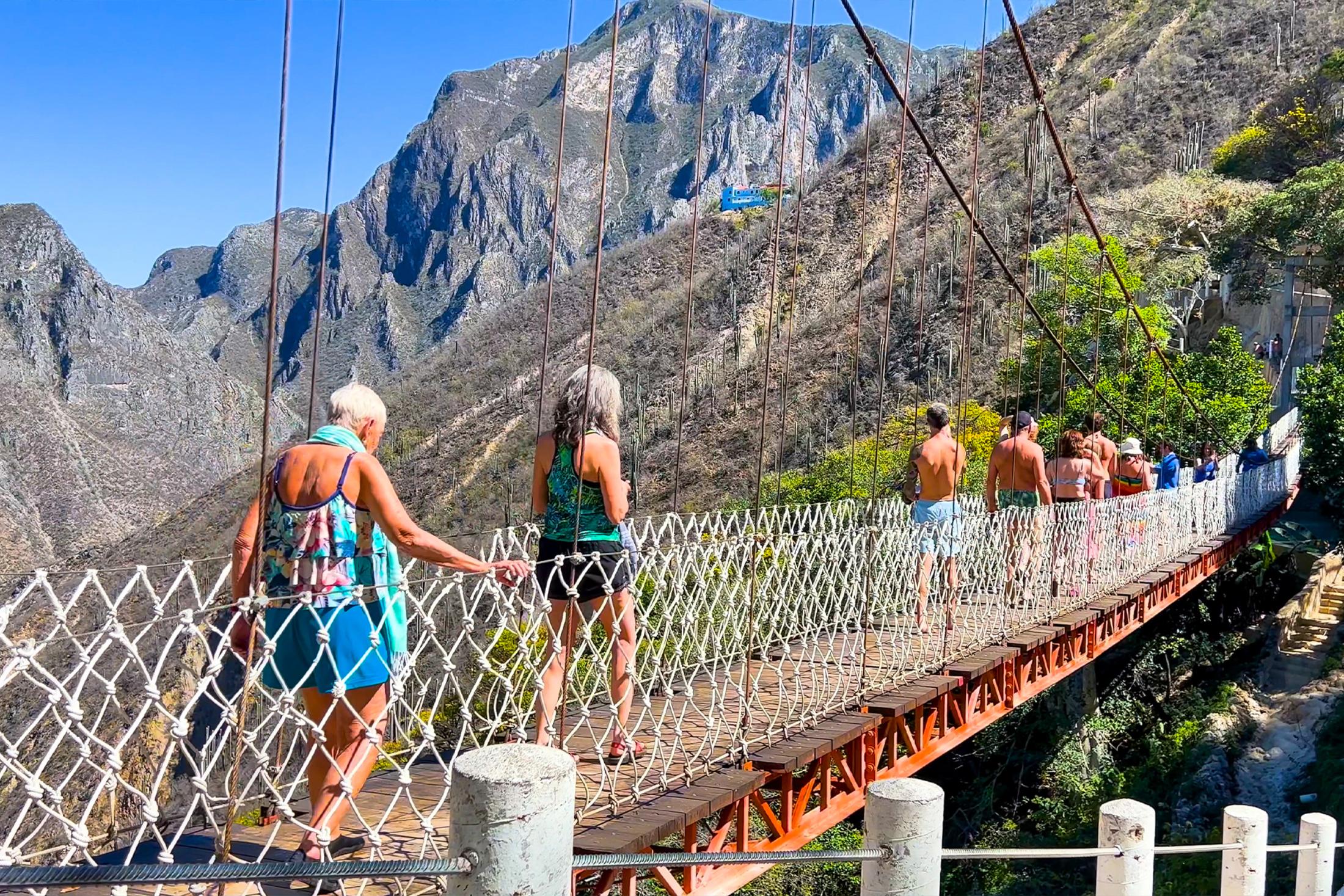
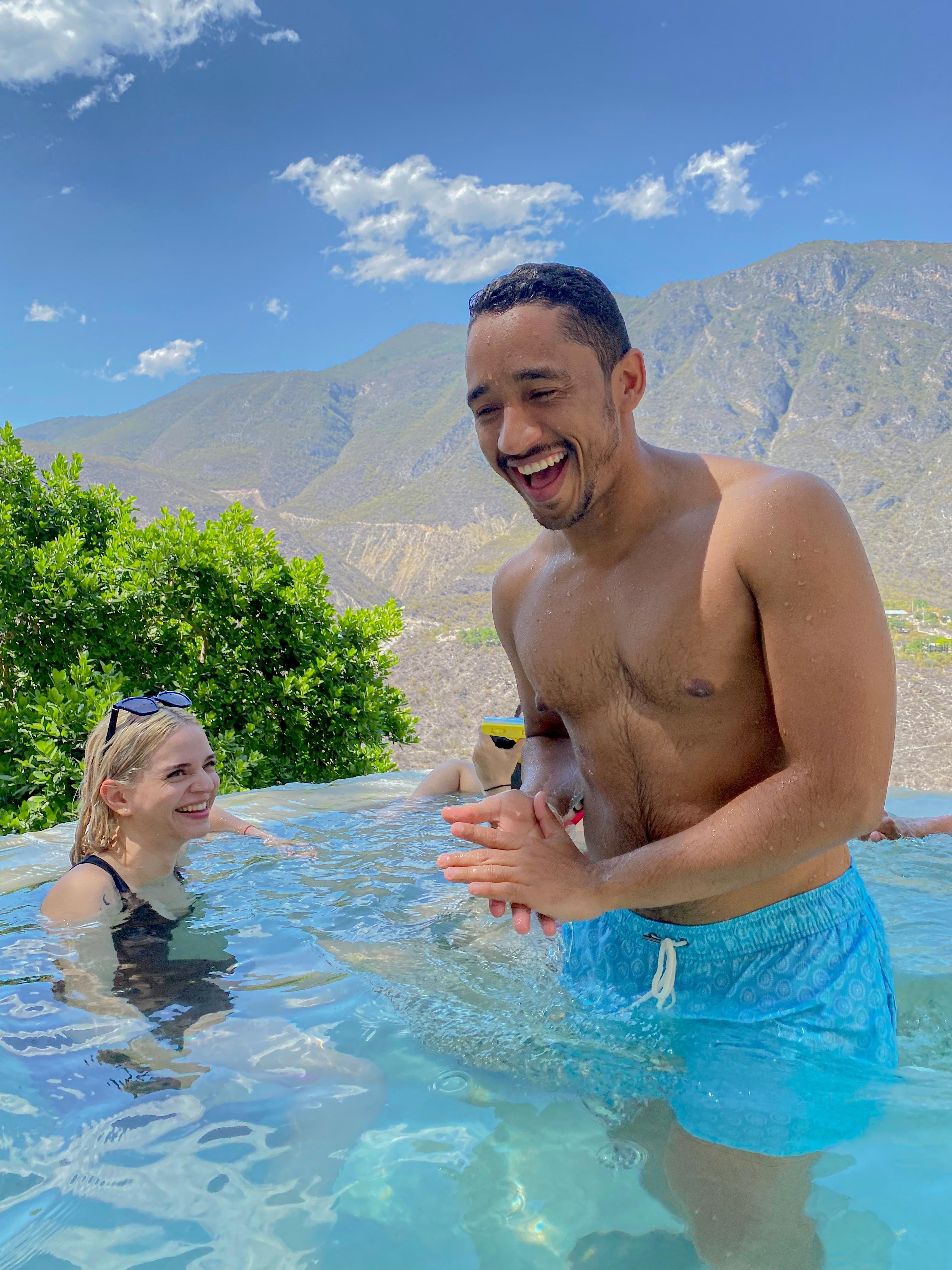
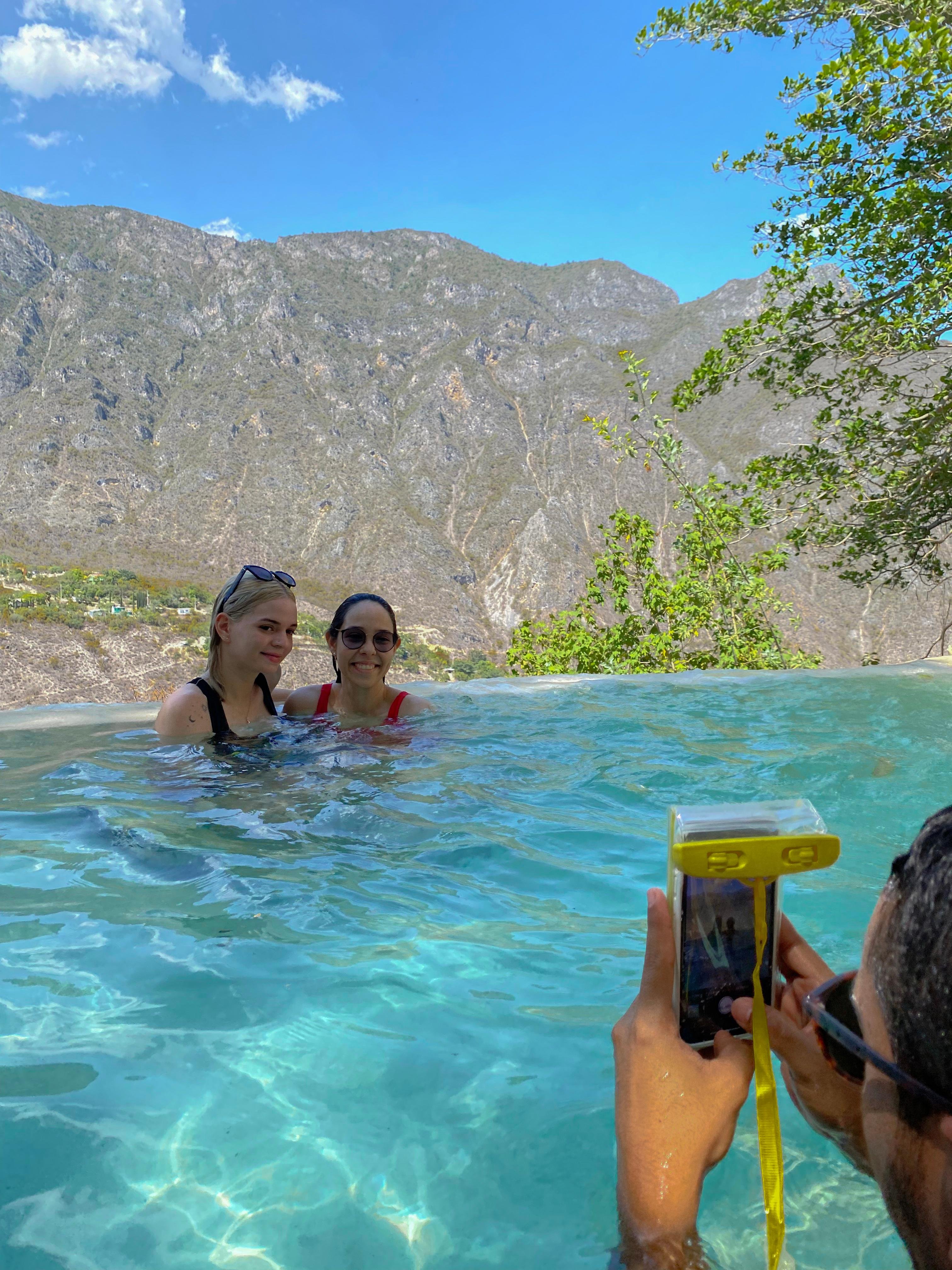
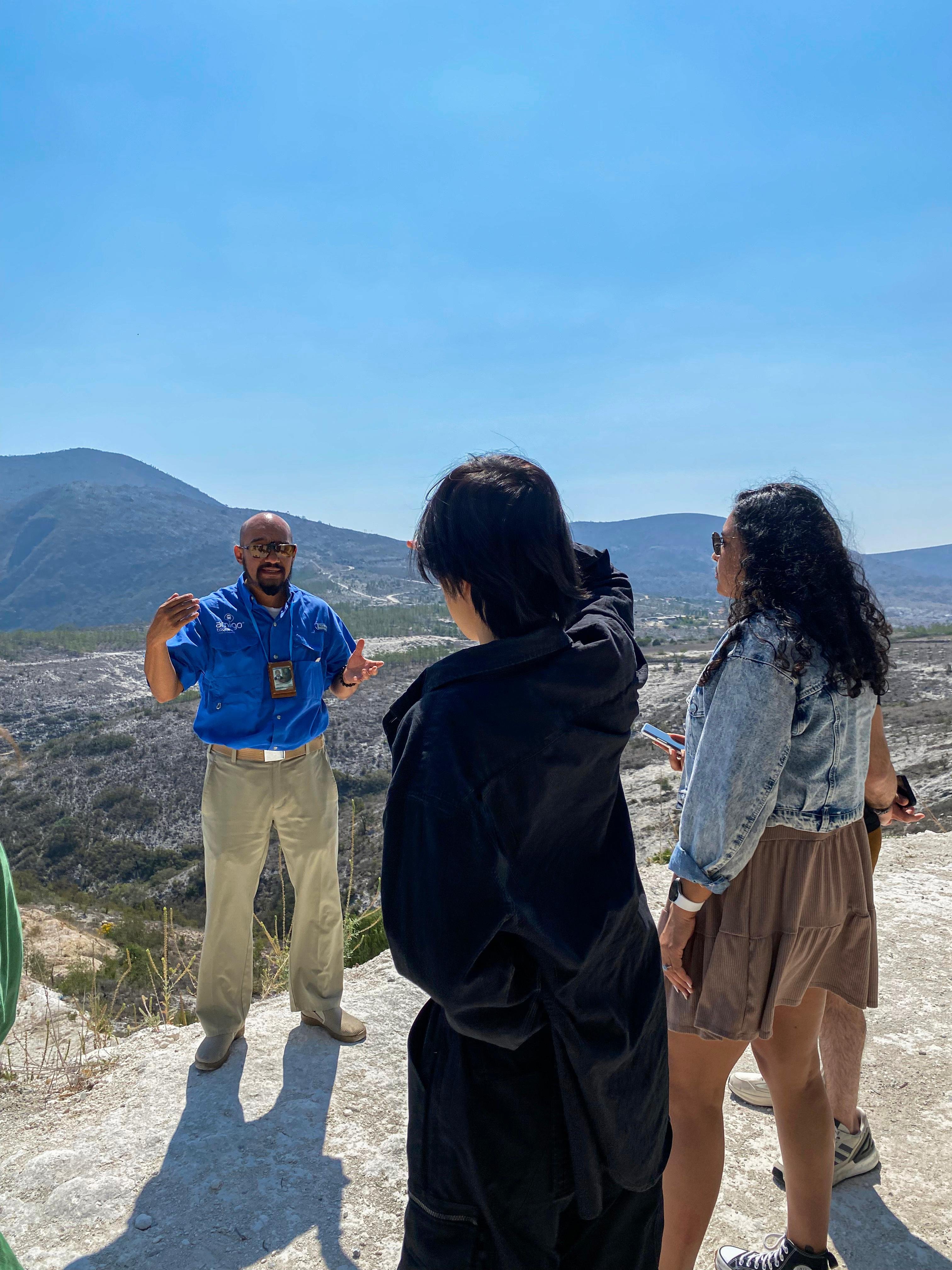
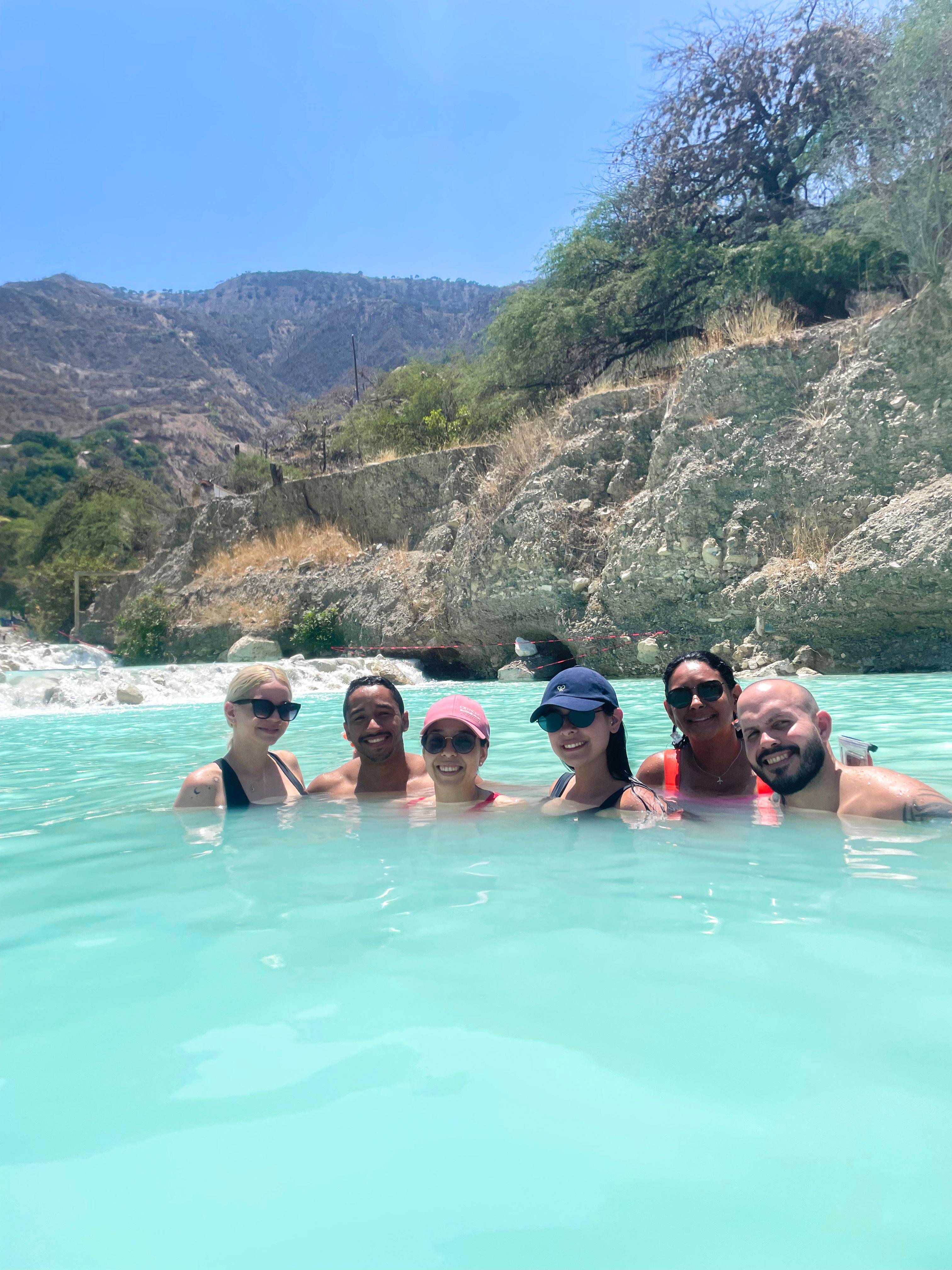
The turquoise Río Tolantongo, the hot-water caves and tunnel, and the cliffside pozas above the gorge — captured on tour.
Book Your Experience
Check Availability & Prices
Select your preferred date and time. Instant confirmation — free cancellation up to 24 hours before departure.
Guided Day Trip vs Driving Yourself vs Staying Over
There is no bookable admission ticket to Tolantongo — the park is run by a local cooperative and gate entry is paid in cash on the day. Here's how the three realistic ways to visit compare.
| Feature | RECOMMENDED Guided Day Trip from CDMX | Self-Drive Day Trip | Overnight at Tolantongo |
|---|---|---|---|
| Getting There | Round-trip transport from Mexico City included — you sleep or relax on the ≈4-hour drive | You drive ≈4–4.5 hours each way, including a steep, winding descent into the canyon | Drive or bus in, then stay in the canyon — no daily commute |
| Time in the Park | Roughly 4 hours on site (the featured tour's schedule) | As long as you like, minus the long drive home before dark | Two days — dawn caves before the crowds, evening pools after they leave |
| Park Gate Entry | Paid in cash at the gate; tours either include it or arrange it on arrival | You pay the per-person entrance fee in cash at the gate yourself | You pay the entrance fee in cash at the gate, plus lodging/camping |
| Mountain Road | ✓ A professional driver handles the switchbacks and the return in the dark | You navigate a narrow, steep canyon road — nerve-racking for some drivers | Driven once each way, in daylight if you plan it |
| Crowd Control | Fixed schedule — you're on site during the busy midday window | Arrive at opening to beat day-trippers, but still leave mid-afternoon | ✓ Best crowd control — the pools empty out once the day-trippers drive home |
| Cost | From $124–191 per person all-in (transport + guide; gate entry may be separate) | Fuel + tolls + gate entry, split across your car — cheapest if you're a full car | Gate entry + camping or a cabaña, over one or two nights |
| Best For | First-timers, solo travellers, and anyone who doesn't want to drive | Confident drivers travelling as a group who want a flexible day | Photographers and anyone who wants the canyon at its calmest |
| Check Availability |
Compare Your Options
Tolantongo Day Trips from Mexico City
Six guided day trips reach the Grutas de Tolantongo — most from Mexico City, one from Querétaro, plus a private La Gloria option. All include round-trip transport and free cancellation.
 BUDGET PICK
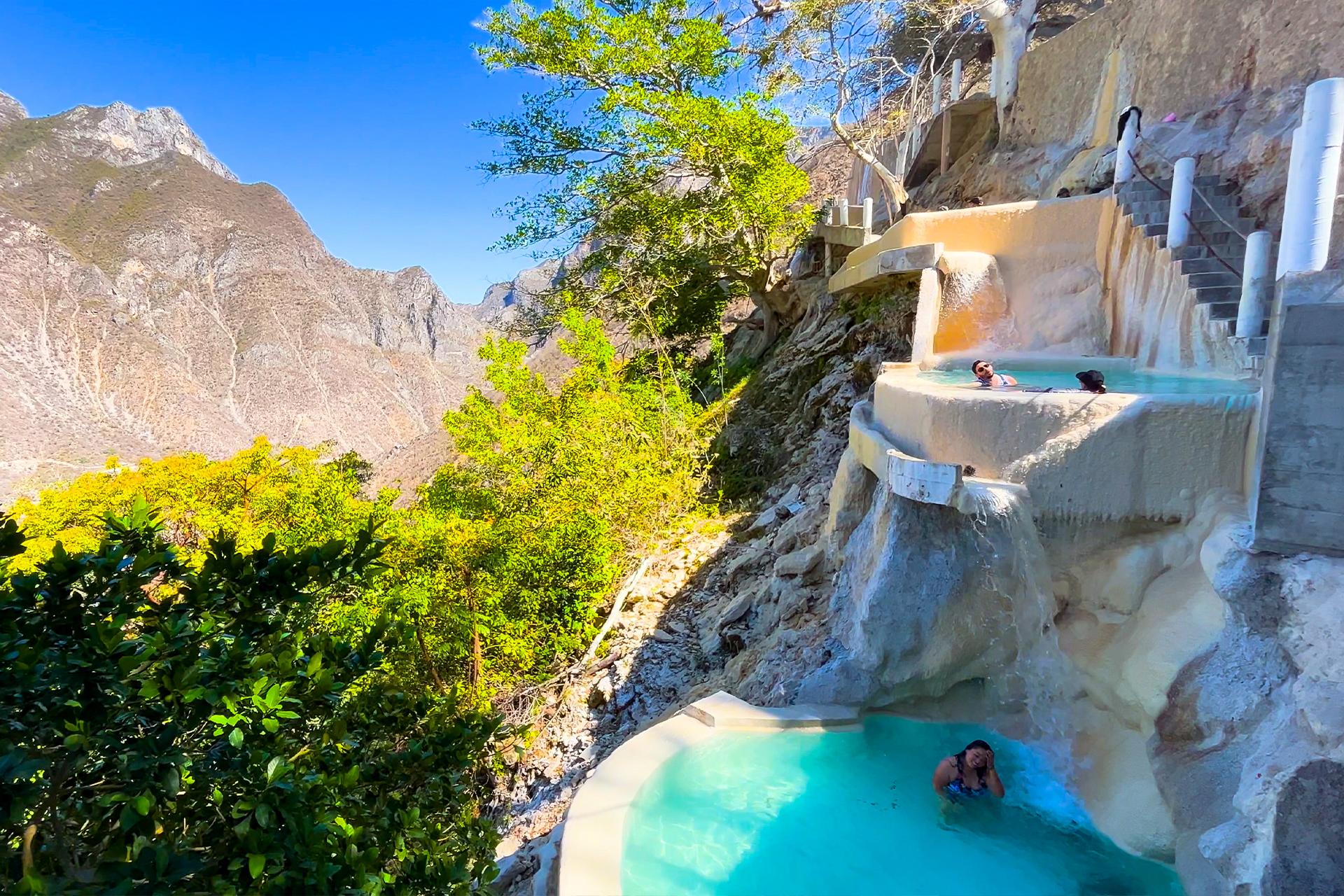
From CDMX: Small-Group Tour to the Tolantongo Caves - 2026 (Verified Reviews)
 TOP RATED
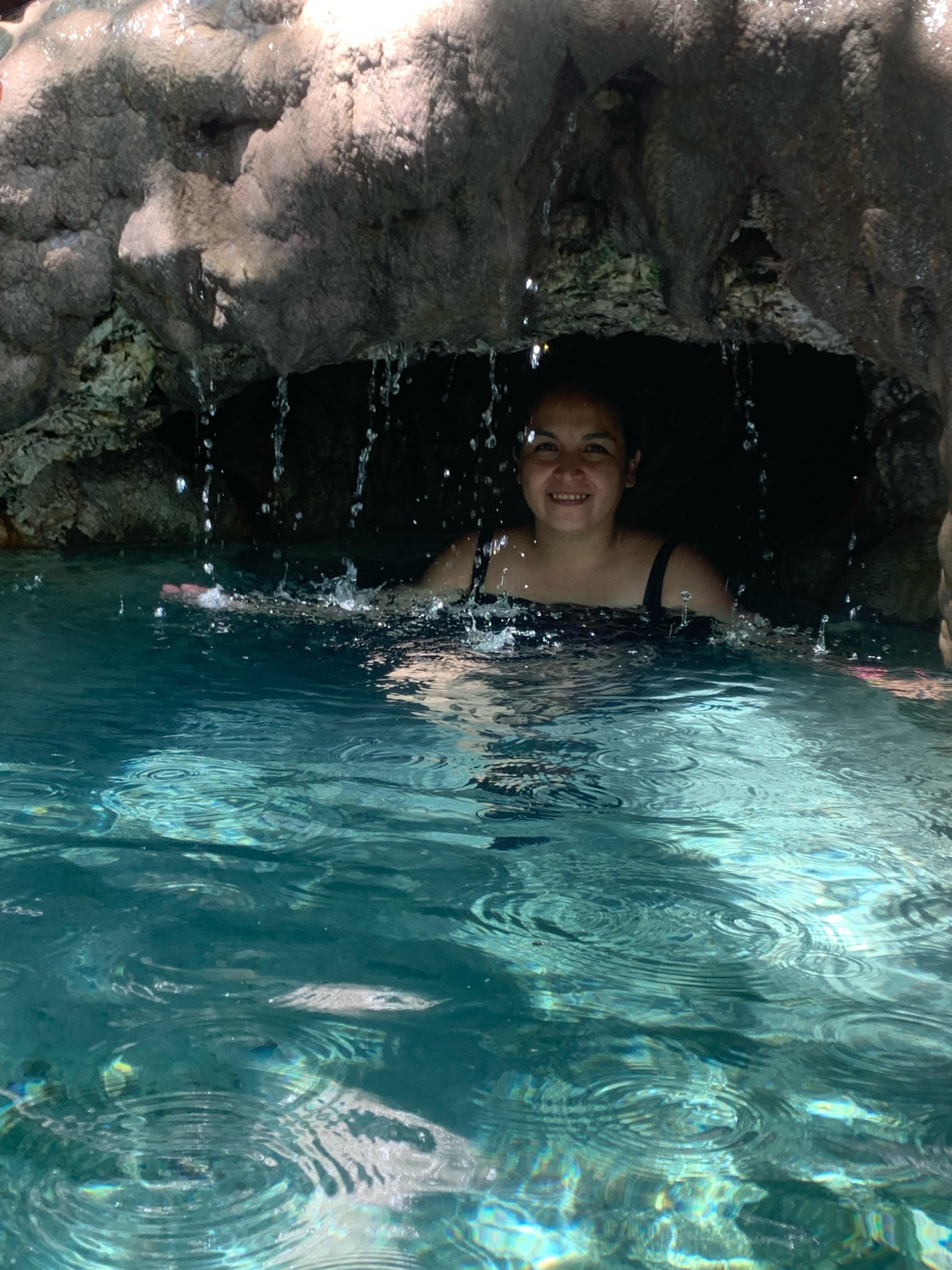
From Mexico City: Tolantongo Hot Springs Day Trip with Guide - 2026 (Verified Reviews)
 5.0 STARS
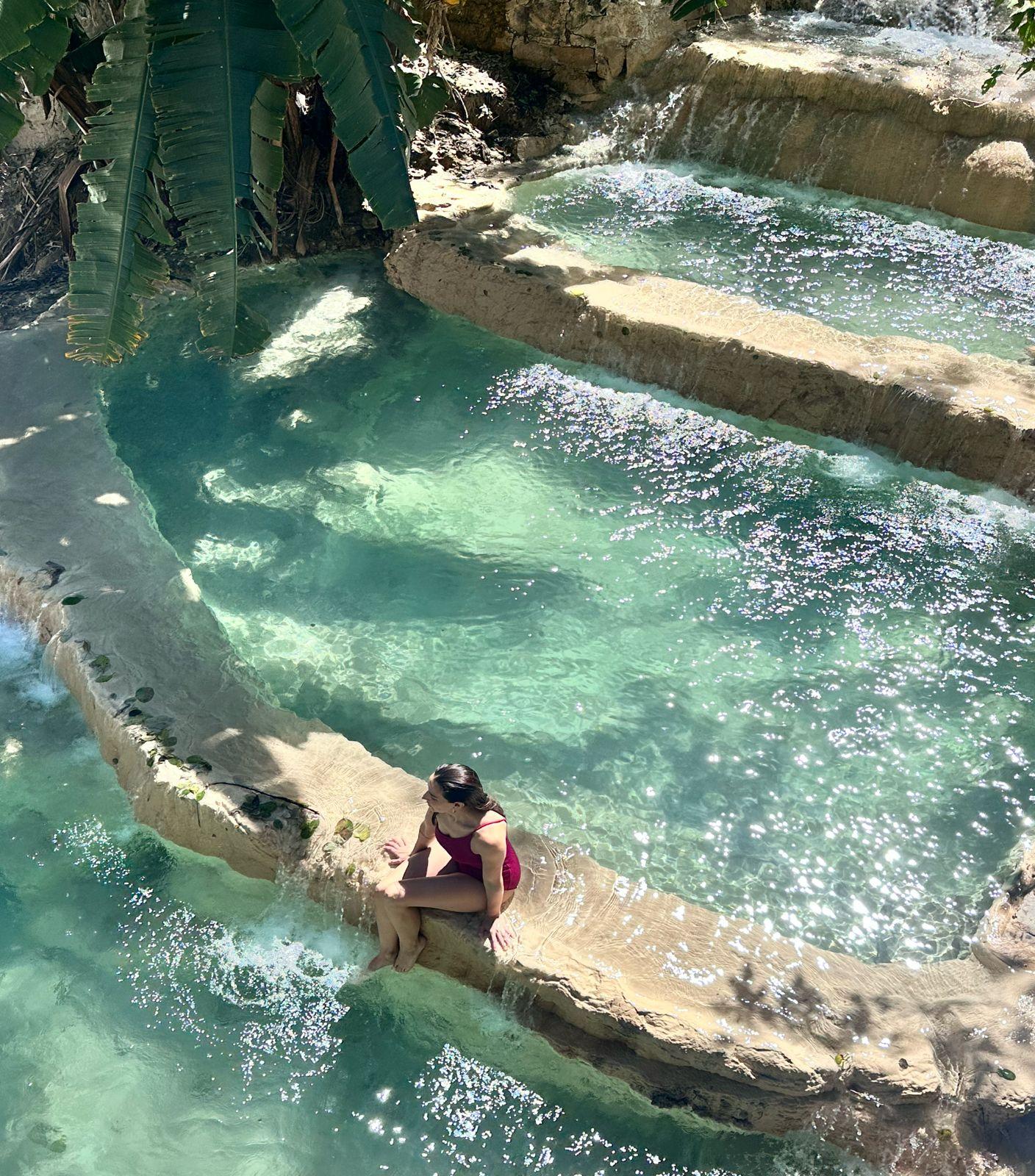
From CDMX: Hot springs and thermal baths in Tolantongo caves - 2026 (Verified Reviews)
 PRIVATE · LA GLORIA
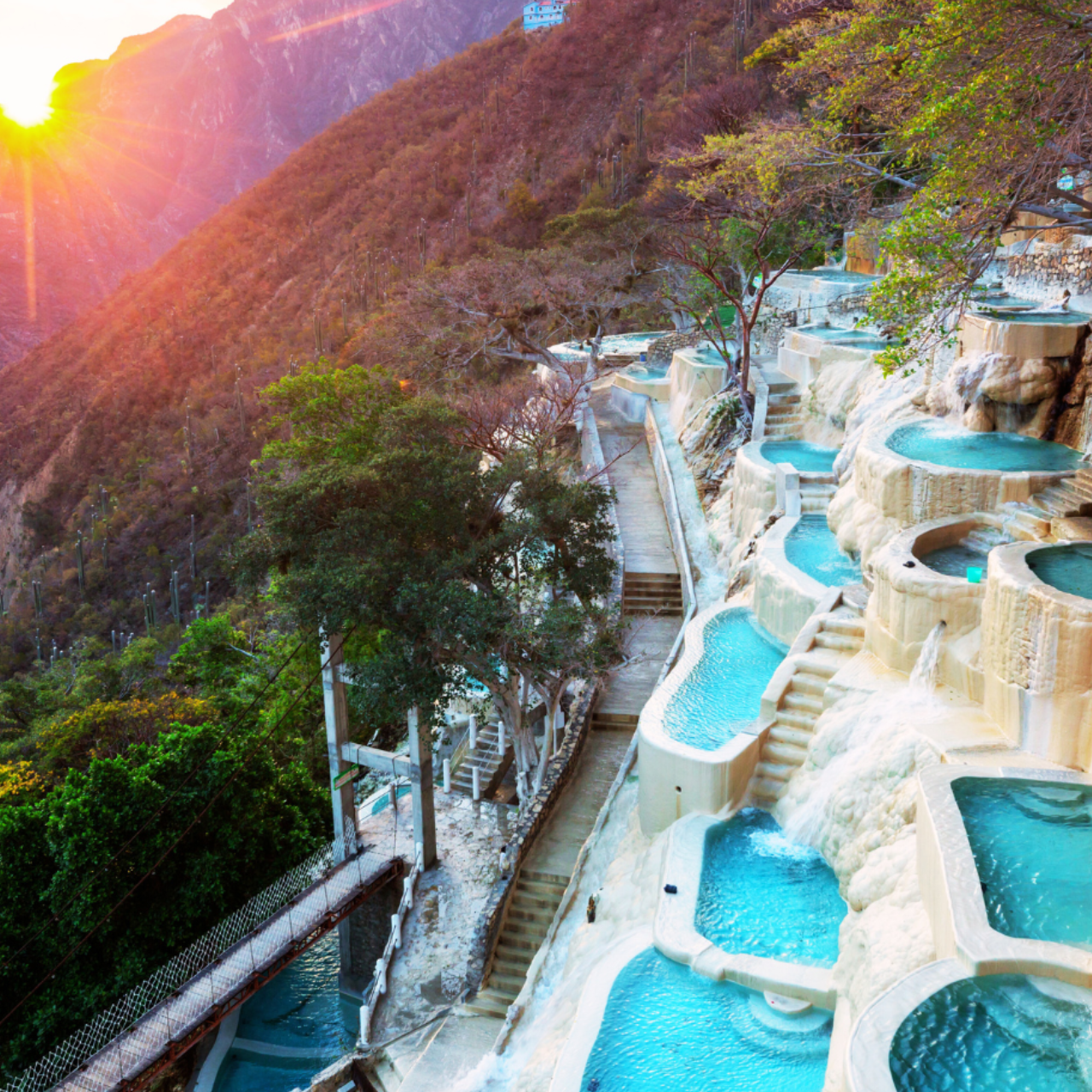
Private tour of La Gloria, a paradise within Tolantongo, from Mexico City - 2026 (Verified Reviews)
 FROM QUERÉTARO
From Querétaro Grutas de Tolantongo - 2026 (Verified Reviews)
The Complete Guide
What the Grutas de Tolantongo Actually Are
A canyon of hot-water caves, a turquoise river and cliffside pools in the mountains of Hidalgo — and the honest logistics of getting there.
The Grutas de Tolantongo are not a single cave and not a single pool. They are a whole river canyon in the mountains of Hidalgo, central Mexico, where geothermally heated water surfaces everywhere — pouring out of a cave, seeping through a tunnel in the rock, warming a turquoise river, and filling dozens of pools built into a cliff face high above the valley floor. It sits at around 1,280 metres in the municipality of Cardonal, and for most visitors it is a long day trip north from Mexico City. This page explains what’s actually here, how the place works, and the most honest way to visit — including the parts the glossy photos leave out.
The two hot-water caves: La Gruta and El Túnel
The features that give the place its name are two warm caverns at the head of the canyon. La Gruta is a genuine cave where hot mineral water sheets down the rock walls like a set of natural showers — you wade in, stand under the flow, and let the warm water fall over you in near-darkness. Beside it, El Túnel is a narrow, low tunnel bored into the mountain that you shuffle into through waist-deep hot water, feeling your way toward warm springs deep inside. Neither is for swimming laps; both are for soaking. The water here holds a remarkably constant temperature of about 36 °C (97 °F) year-round (as of July 2026), because it comes straight from deep geothermal springs rather than the sun.
The turquoise river and the cliffside pozas
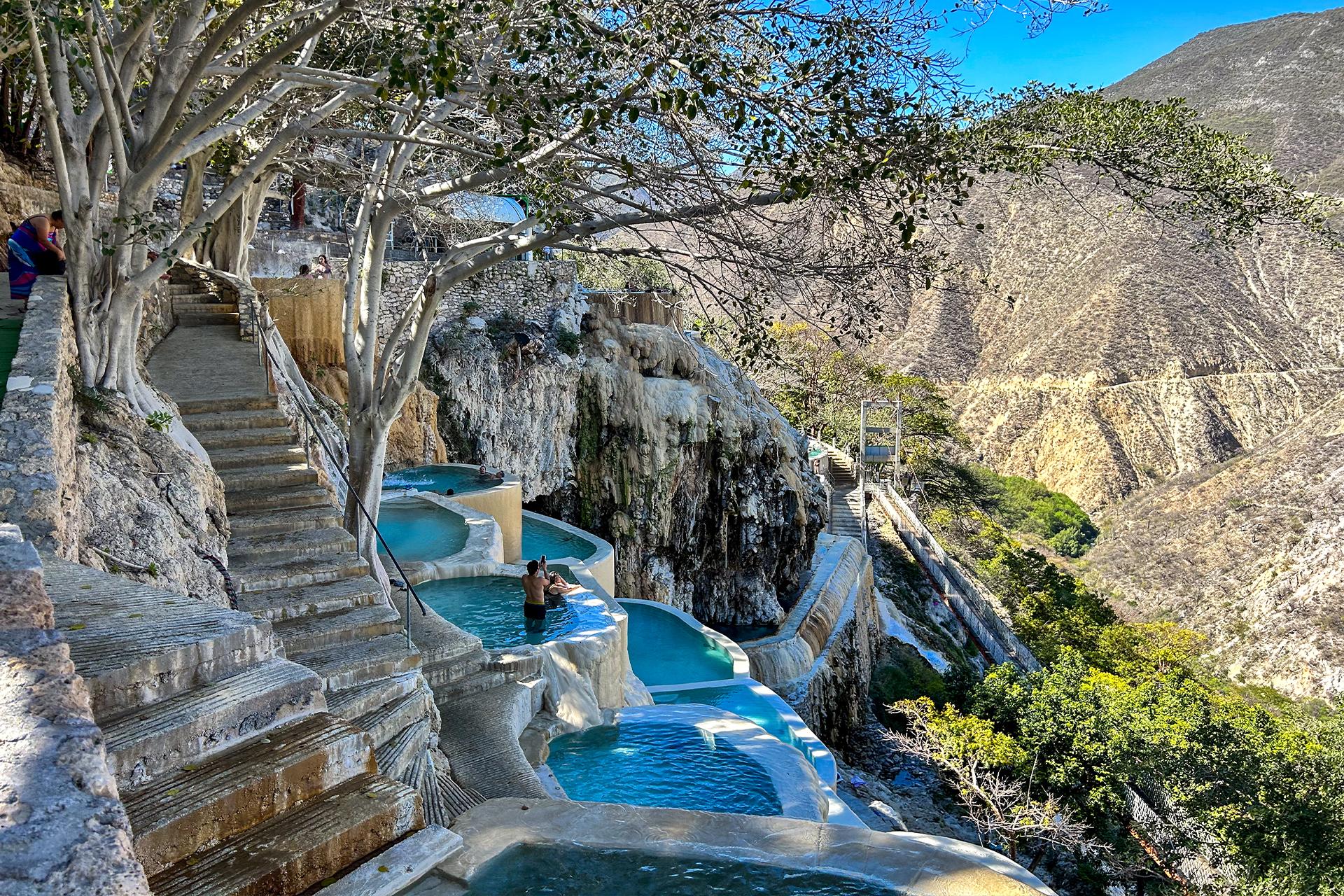
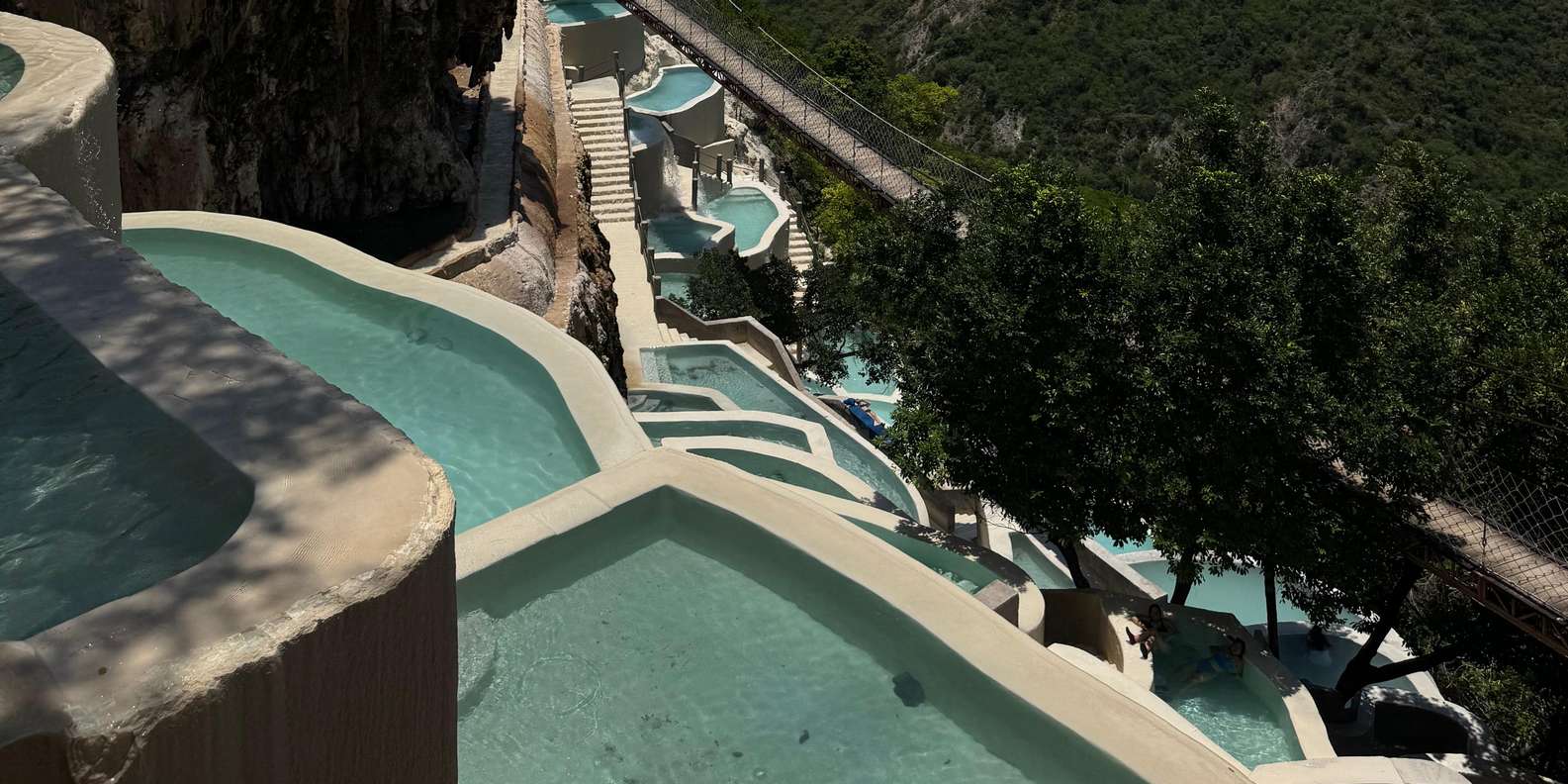
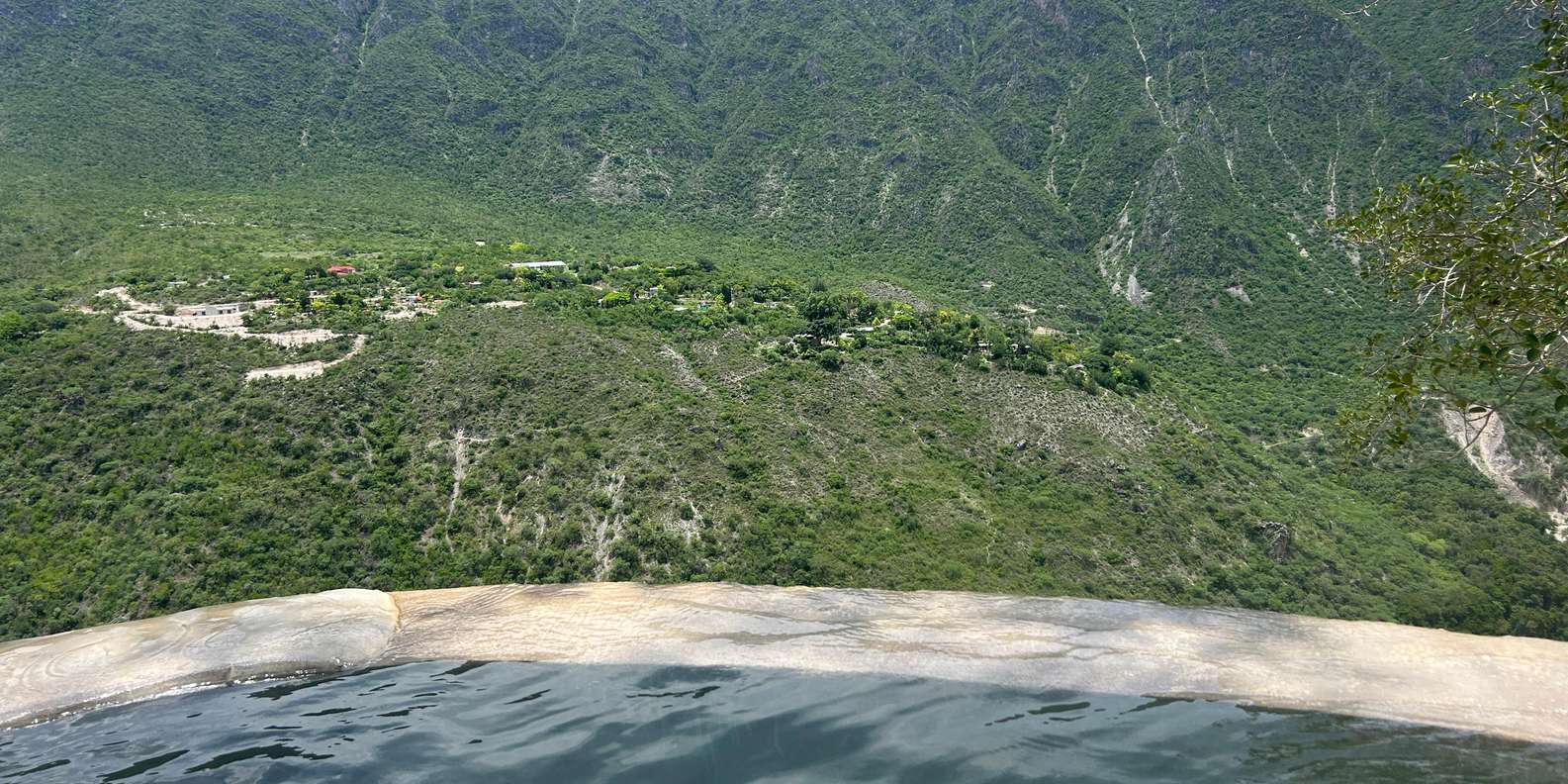
Running through the canyon is the Río Tolantongo, whose milky turquoise colour comes from dissolved minerals rather than any dye. It’s warm enough to swim and, in the dry season, an almost unreal shade of blue-green. High above it, bolted onto the canyon wall, are the pozas — roughly 30 to 40 terraced, infinity-style thermal pools stacked in tiers so that each one looks out across the gorge to the mountains opposite. This section, known as Paraíso Escondido (“hidden paradise”), is the picture everyone has seen: bright blue pools apparently floating over a green valley, with a water slide and a restaurant at the top. It is also, predictably, the most crowded spot in the park at midday.
La Gloria — the quieter half
Confusingly, the canyon is actually run by two separate community cooperatives. The main resort — the caves, the river and the Paraíso Escondido pozas — is managed by one ejido of local families. A second, independent cooperative runs La Gloria, a smaller area further along the canyon with its own waterfalls, natural pools, cabins and camping. La Gloria charges its own separate admission and generally feels far less crowded, which is why one of the day trips we feature is a private tour focused on it. If the main pozas look overwhelming in photos, La Gloria is the antidote. There’s more in our La Gloria and cliffside pozas guide.
Where it is, and the drive you’re really signing up for
Tolantongo lies roughly 180 km north of Mexico City, reached via the highway toward Pachuca, then Actopan, Ixmiquilpan and finally the winding descent into the canyon near El Cardonal. On a map that looks like a two-and-a-half-hour drive; in practice, with the mountain roads and the slow, steep drop into the gorge, most guided trips budget around four hours each way. That’s the single most important fact to plan around: a day trip from the capital is a genuine dawn-to-night undertaking of roughly 14 hours, with about four of those hours actually spent in the water. Your realistic ways in are self-driving, a public bus toward Ixmiquilpan followed by a local colectivo, or a guided day trip — laid out fully in our getting-to-Tolantongo guide.
The honest part: there is no ticket to buy online
Here’s what no booking site will tell you plainly: you cannot buy an admission ticket to Tolantongo in advance. The park is community-run, and entry is paid in cash, at the gate, on the day you arrive — a per-person entrance fee of around 150 pesos, plus a small parking charge, with no card payments and few ATMs nearby (as of July 2026 — rates are set by the cooperative and change periodically, so confirm at the gate and bring pesos). La Gloria charges its own separate fee. What you can book ahead is a guided day trip that covers the round-trip transport from Mexico City and a bilingual guide; those tours typically include or arrange the gate fee for you. We’re an independent guide and GetYourGuide affiliate — not the cooperative — so we never sell “official Tolantongo tickets,” because no such thing exists.
Do it yourself, or take the tour?
Both are legitimate. Self-driving is the cheapest option if you can fill a car and gives you total control over your schedule — but the canyon road is narrow and steep, and you’ll still face that long return drive after dark. A guided day trip costs more per person, yet it removes the driving, the navigation, the 5:30 am logistics and the worry about the gate-fee cash — which is exactly why it’s the most popular choice for first-timers and solo travellers. Our featured small-group trip is rated 4.6 / 5 by 654 verified guests, and the six options above range from a budget small-group departure to a private La Gloria tour and one that leaves from Querétaro instead of the capital. The comparison table lays the trade-offs side by side.
When to go
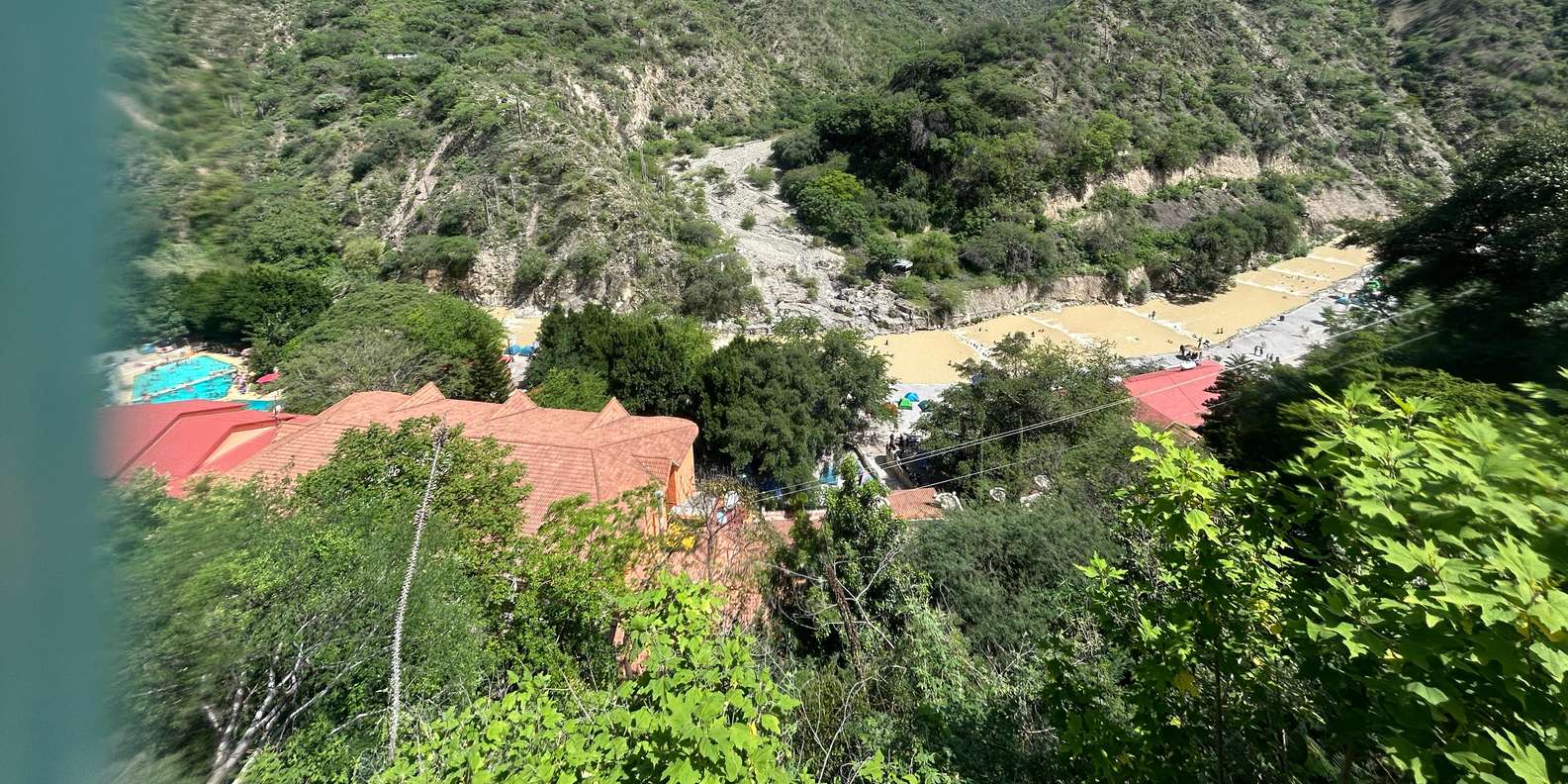
If you have any flexibility, come on a weekday. Weekends, Semana Santa (Easter week), and the mid-December to mid-January holidays are when Mexican families arrive in force and the pozas fill up. For the water at its clearest turquoise, aim for the dry season (roughly October to May); heavy summer rain can raise the river and turn it brown as it carries silt down from the mountains, and can occasionally close the cave or river for safety. Spring (March–May) and autumn (September–November) tend to balance good weather with more manageable crowds. Our best time to visit guide breaks it down month by month, alongside what the day really costs.
Whether you drive the switchbacks yourself or let a guide handle the long haul, Tolantongo rewards the effort: few places let you stand under a warm waterfall inside a cave in the morning and float in a cliff-edge pool over a turquoise river by afternoon. Plan for the crowds, bring cash for the gate, and give the canyon a full day — it earns it.
Guest Reviews
What Travellers Say
5/5
from 654 verified GetYourGuide guests
"Super fun! The ride was great, the pick up was super easy too. The ride was also quicker than we thought, thankfully there was no one at the whirlpools as well. Johnathan was a great guide and even came to find us when we were running out on time because we were so much fun. I would definitely recommend him again to a friend or family!"
"Angel was a great guide! He kept us updated and on time and provided assistance with translations either the vendors. The trip was all day but included frequent stops for food and bathroom breaks. The caves and pools were amazing and we went on a Thursday and it was relatively empty."
"We had a great day with Daniel and Rudolpho as our guide and driver. The drive was smooth and Daniel made sure we all got to know each other while having fun. I felt safe during the activities and felt like we had a good amount of time at each spot. Daniel’s humour definitely made a long journey feel short. Definitely worth it!"
"It was an enjoyable day. Personally the waterfalls and tunnel was my favourite. The Instagram pools are nice, but the first part was by far the best. Although at the pools, I had the best pina colada I’ve ever tried."
"It was amazing! Thankful that I had Mariana S my tour guide—she was knowledgeable, incredibly funny and kind, and really wanted our group to have the best time."
"My trip was great. Great scenery along the ride. Awesome experience going through the caves. I thoroughly enjoyed the hot springs as well. For my first time being in Mexico I definitely want to come back and do it again!!!"
"Our tour guide Alex, Alvaro and driver Lorenzo are amazing. They provided one of the greatest experiences."
Read all 654 verified reviews
See All ReviewsSee Tolantongo Without the 4-Hour Drive Each Way
The top-rated small-group day trip handles the long round-trip from Mexico City, the park gate, and a bilingual guide — so you can spend the day in the caves, river and cliffside pools. Rated 4.6/5 by 654 guests. Free cancellation. Starting from $132 per person.
Check Availability & BookCan't Make These Dates?
Browse More Available Options
Find a tour that fits your schedule — all with instant confirmation and free cancellation.
Grutas de Tolantongo — Frequently Asked Questions
How the park works, how to get there, and what to expect before you go.
No. Tolantongo has no bookable admission ticket — the park is run by a local ejido (community cooperative), and entry is paid in cash at the gate on the day you arrive. What you can book in advance is a guided day trip from Mexico City, which covers the round-trip transport and a bilingual guide; the park gate fee is handled on arrival. We're an independent guide and affiliate, not the cooperative — we don't sell park tickets and there is no 'official' online ticket to buy.
You pay a per-person entrance fee in cash at the gate when you arrive — Tolantongo does not take cards for entry, and there are limited ATMs, so bring pesos. Fees can change and there are sometimes separate charges for parking or camping. Because rates are set by the cooperative and adjusted periodically, we don't quote a fixed figure; check the current amount before you travel. See our best time to visit and cost guide for what to budget.
Tolantongo is in the mountains of Hidalgo, roughly a four-hour drive north of Mexico City. Your realistic options are: self-drive (a scenic but steep, winding descent into the canyon), public bus toward Ixmiquilpan followed by a local colectivo or taxi, or a guided day trip that handles the whole round-trip for you. Full details, pros and cons in our getting-to-Tolantongo guide.
Expect a long day — around 14 hours door to door. Most tours leave central Mexico City near 5:30 am, drive about four hours each way, and give you roughly four hours on site at the caves, river and pools. If that sounds rushed, staying overnight is the alternative; see our camping and where to stay guide.
Yes — that's the whole point. The two signature features are La Gruta, a cave where warm mineral water pours down the rock like natural showers, and El Túnel, a narrow tunnel you wade into through waist-deep hot water. Both are shallow and meant for soaking rather than lap-swimming. Our hot springs and thermal pools guide explains what each one is like.
It depends where you are. The cave, tunnel and cliffside pools are geothermally warmed — pleasantly warm, around body temperature. The Río Tolantongo itself is cooler and famous for its milky turquoise colour, which comes from dissolved minerals. So you can alternate between warm soaks and a refreshing river swim in the same visit. More detail in the thermal pools guide.
La Gloria is a quieter section within the wider Tolantongo canyon, with its own thermal pools and dramatic views over the gorge — it tends to see fewer day-trippers than the main pozas. One of our featured options is a private tour focused on it. Read about it in the La Gloria and cliffside pozas guide.
Both work. Driving yourself is cheaper if you fill a car and gives you a flexible schedule, but the canyon road is narrow and steep, and you'll still face the ≈4-hour return in the dark. A guided day trip costs more per person but removes the driving, the navigation and the early-morning logistics — which is why it's the most popular choice for first-timers and solo travellers. The comparison table above breaks it down.
Swimwear, a towel, water shoes (surfaces are wet and rocky), a change of clothes, sunscreen, and — importantly — cash in pesos for the gate fee, parking, lockers, and food, since cards are rarely accepted. Bring a valid ID or passport; some operators note that visitors may be asked to show proof of legal stay in Mexico. Lockers are available to rent on site.
Yes. The cooperatives that run the canyon offer on-site camping areas as well as hotels and cabañas, so you can turn the day trip into an overnight. Staying over is the best way to have the pools to yourself early and late, when the day-trippers have driven home. See the camping and lodging guide for the options.
Weekends, Mexican public holidays and Semana Santa (Easter week) are by far the busiest, when the pools can get packed. Weekdays are much calmer. The dry season (roughly late autumn to spring) generally means clearer river water and safer canyon conditions; heavy rain can raise the river and occasionally restrict cave or river access for safety. Our best time to visit guide goes month by month.
No — and we're upfront about that. The day trips are run by independent, licensed operators (through GetYourGuide), not by the Tolantongo cooperative itself. There's no 'official' Tolantongo tour company selling online. What you're buying is well-organised transport and guiding; the park experience on the ground is the same one everyone shares. Our featured small-group trip is rated 4.6/5 by 654 verified guests.
Largely yes — many pools are shallow and family-friendly, and the caves are for wading and soaking rather than deep swimming. That said, some operators flag their trips as not ideal for non-swimmers, pregnant travellers, or people with back problems, partly because of the long bumpy drive and slippery surfaces. Check each tour's 'not suitable for' notes before booking, and supervise children closely near the river and cliff pools.
Still have questions? Email us at info@tolantongocaves.com